One-line conclusion: You probably think of your skeleton as just a support structure — but the latest science reveals it's actually one of your body's most important blood sugar regulators.
When you think about bones, what comes to mind? Protecting organs, supporting your body, letting you stand and walk?
All true. But over the past two decades, scientists have discovered a role that was long overlooked: your bones are one of the body's largest endocrine organs. Your skeleton isn't just a framework — it actually releases hormones that regulate your blood sugar, fat metabolism, and even your appetite.
This discovery is rewriting our understanding of diabetes, obesity, and osteoporosis.
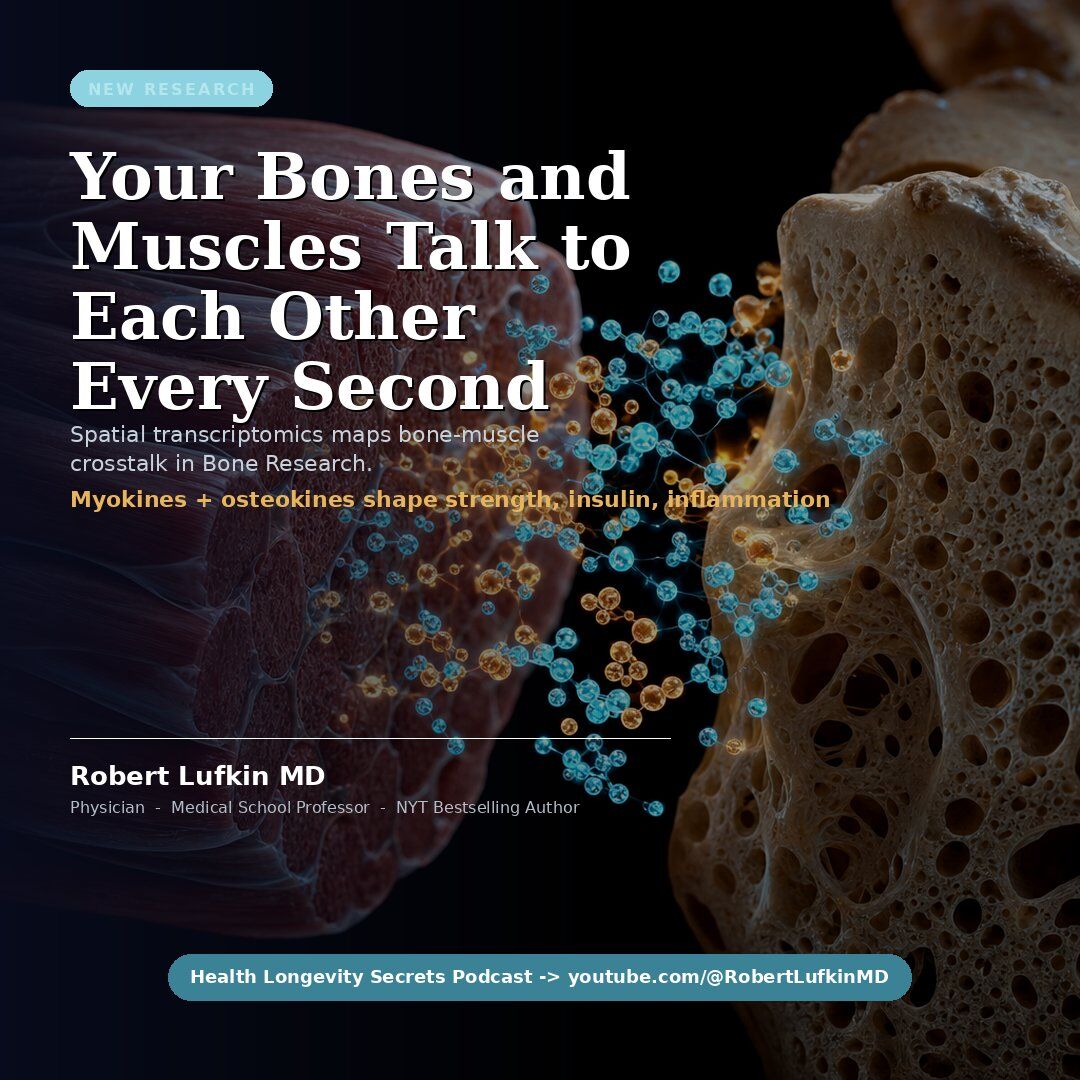
Osteocalcin: Your Skeleton's Built-In Blood Sugar Controller
The story begins in 2007. Gerard Karsenty's team at Columbia University published a paper in Cell that shook the medical world — they discovered that bones secrete a hormone called osteocalcin that directly regulates insulin secretion and glucose metabolism.
Osteocalcin was originally known only as a bone formation marker. When osteoblasts (bone-building cells) make new bone, they secrete osteocalcin to help calcium bind. But Karsenty's team discovered that in its uncarboxylated form, osteocalcin acts as a hormone — traveling through the bloodstream to reach multiple organs:
- In the pancreas: Osteocalcin signals beta cells to release more insulin
- In fat cells: It triggers the release of adiponectin, increasing insulin sensitivity
- In muscle: It promotes glucose uptake
In other words, your bones have been helping control your blood sugar this whole time.

Why This Discovery Matters
Conventional thinking held that blood sugar regulation was the pancreas's job — insulin is released by beta cells, telling the body's cells to absorb glucose. The skeleton's role was seen as passive: it simply needed calcium, and calcium metabolism was influenced by hormones.
The discovery of osteocalcin turned this model upside down. Scientists now recognize a two-way communication network between bones, the pancreas, fat, and muscle:
Bones secrete osteocalcin → Pancreas releases more insulin → Blood sugar drops → Bones get more energy → Bones continue producing osteocalcin
This is a positive feedback loop. When this loop is disrupted — for example, by osteoporosis or a sedentary lifestyle that weakens bone health — osteocalcin levels drop, insulin secretion follows, and blood sugar control suffers.
This also explains why osteoporosis patients have a higher risk of diabetes. The two conditions look unrelated on the surface, but they share a common hormonal pathway.
The GLP-1 Question: Weight Loss at the Cost of Bone Health?
This discovery also raises important questions about the GLP-1 weight-loss drugs (like Ozempic and Wegovy) that have exploded in popularity.
GLP-1 drugs work by mimicking gut hormones to reduce appetite, slow stomach emptying, and boost insulin secretion. But recent research from Wake Forest University suggests that rapid weight loss may be accompanied by bone loss — which ties directly into the bone-blood sugar pathway.
When weight drops rapidly, the mechanical load on bones decreases. Osteoblast activity declines, and osteocalcin secretion drops. This can create a vicious cycle: weight loss → bone loss → less osteocalcin → reduced blood sugar regulation.
For patients using GLP-1 drugs, this means bone health can't be ignored during weight loss. Adequate calcium intake, vitamin D supplementation, and weight-bearing exercise become even more critical.

How to Protect Bone Health for Better Blood Sugar
Understanding the bone-blood sugar connection gives you practical tools you might not have considered:
1. Weight-bearing exercise is the best "bone hormone medicine"When you walk, run, or climb stairs, the mechanical stress on your bones stimulates osteoblast activity and increases osteocalcin secretion. Studies show that 150 minutes of moderate exercise per week significantly increases serum osteocalcin levels.
2. Get enough vitamin D and calciumVitamin D helps calcium absorption, which is bone health 101. But importantly, vitamin D itself also participates in insulin secretion and blood sugar regulation. Good calcium sources include dairy, dark leafy greens, tofu, and sesame seeds.
3. Don't skimp on proteinProtein intake is critical for osteoblast function and bone repair. Current nutritional research recommends 1.2-1.6 g/kg of protein per day for adults over 50 to maintain muscle and bone health.
4. If you're using GLP-1 drugs, monitor your bonesIf you're on GLP-1 weight-loss medication, consider regular bone density checks and discuss calcium and vitamin D supplementation with your doctor.

The Future: Can Bone Hormones Become Diabetes Treatment?
Karsenty's work didn't just change how we see bones — it opened entirely new therapeutic avenues. Scientists are now investigating:
- Synthetic osteocalcin analogs: Could a drug mimicking osteocalcin's effect treat diabetes?
- The bone-gut axis: Do bone hormones also affect gut microbiota and nutrient absorption?
- Exercise-mimetic drugs: Can we find a compound that stimulates bone osteocalcin secretion the way exercise does?
These are all active areas of research. But even before these drugs reach the market, we already know the most effective approach: exercise regularly, eat well, and treat your skeleton like the endocrine organ it is.
FAQ
Q: Do bones really secrete hormones?A: Yes. Osteoblasts secrete osteocalcin, a hormone that regulates insulin secretion and glucose metabolism.
Q: How does osteocalcin affect blood sugar?A: It signals pancreatic beta cells to release more insulin and tells fat cells to increase insulin sensitivity.
Q: Is there a link between osteoporosis and diabetes?A: Yes. Both conditions share the osteocalcin hormonal pathway. Reduced osteocalcin from osteoporosis can lead to lower insulin secretion.
Q: Can exercise improve blood sugar through bones?A: Yes. Weight-bearing exercise stimulates osteoblast activity, increasing osteocalcin secretion which improves insulin regulation.
Q: Do GLP-1 weight-loss drugs affect bone health?A: Recent research suggests rapid weight loss can come with bone loss. GLP-1 users should supplement calcium and vitamin D and monitor bone density.
Q: What foods protect bone health?A: Calcium-rich foods (dairy, dark leafy greens, tofu), adequate vitamin D (sunlight or supplements), and sufficient protein.
Q: How much exercise is enough?A: 150 minutes of moderate activity per week (brisk walking, jogging, stair climbing) significantly boosts osteocalcin levels.
Q: When will osteocalcin-based treatments be available?A: Synthetic osteocalcin analogs are still in the research phase. Exercise and good nutrition remain the most effective approaches today.
Tags: #Osteocalcin #BoneHealth #BloodSugar #Diabetes #Endocrinology #GLP1 #Osteoporosis #HealthyLiving #ExerciseScience #MetabolicHealth
留言
張貼留言