One-line conclusion: The real "hard tech" in modern fitness gear isn't the steel plates — it's using electromagnetic resistance, sensors, and algorithms to pack what used to require an entire wall of weight stacks into a screen that hangs on your living room wall.
Walk into any modern gym and the iron, cables, and pulleys you see are actually a precise system of simple machines. The new generation of smart home equipment goes further, fusing physics, electronics, and software into one device. This article breaks down what's actually inside the gear that looks so ordinary.

It Starts With the Weight Stack: An Overlooked Mechanical Engineering Problem
The oldest gym machines are surprisingly classical. A "weight stack" machine uses gravity as the source of resistance and a set of simple machines — pulleys, levers, wheels — to deliver that resistance to your body.
Per Wikipedia's entry on weight machines, each plate is threaded onto a vertical rod with holes drilled into it; you insert a pin to decide how many plates from the top you'll lift. The clever part: adjusting the resistance takes almost no effort, yet the same machine can offer many intensity levels across the full range of motion.
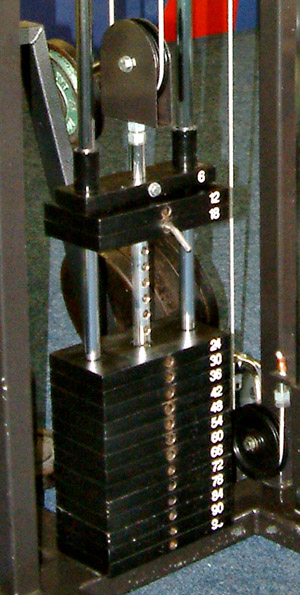
Modern commercial brands (Life Fitness, Technogym, and others) build on this mechanical base with ergonomics, adjustable lever arms, and multiple pulleys that change the "mechanical advantage" — the ratio between the weight you lift and what the machine displays.
The hard-tech insight: even with "just lifting iron," a good machine shapes the resistance to follow your muscle's force curve instead of making you brute-force a fixed load.The Science of Strength: Why "Progressive Overload" Is the Core
No matter how fancy the machine, strength training rests on exercise science. Wikipedia's "strength training" article notes that training means repeatedly contracting a muscle through a movement until near failure — and the key to progress is progressive overload: gradually increasing resistance over time so the muscle adapts and grows.
Every rep has two phases:
- Eccentric: the muscle lengthens (lowering yourself in a push-up)
- Concentric: the muscle shortens (pushing yourself up)
This sounds basic, but it explains why a small innovation like a "smart pin" matters: when the machine remembers your last weight and reps, you're far less likely to silently regress, and progressive overload becomes easy to apply. In a Reddit AMA, the founder of home-gym brand Bells of Steel discussed whether to build a smart pin that counts reps and knows your load — exactly the missing piece in plain iron.
The Real Disruption: Electromagnetic Resistance Replaces the Iron
Weight stacks are reliable but bulky, noisy, and have a fixed resistance curve. The new wave of smart home gear (wall-mounted cable systems like Tonal) takes a completely different path: electromagnetic resistance.
The physics comes from eddy currents. Per Wikipedia, when a conductive metal moves through a magnetic field, it induces loop-shaped currents (eddy currents), and by Lenz's law those currents create a magnetic field that opposes the original motion — producing drag. This mechanism was originally used in safety brakes for power tools: a spinning disc gets "caught" near a magnet.
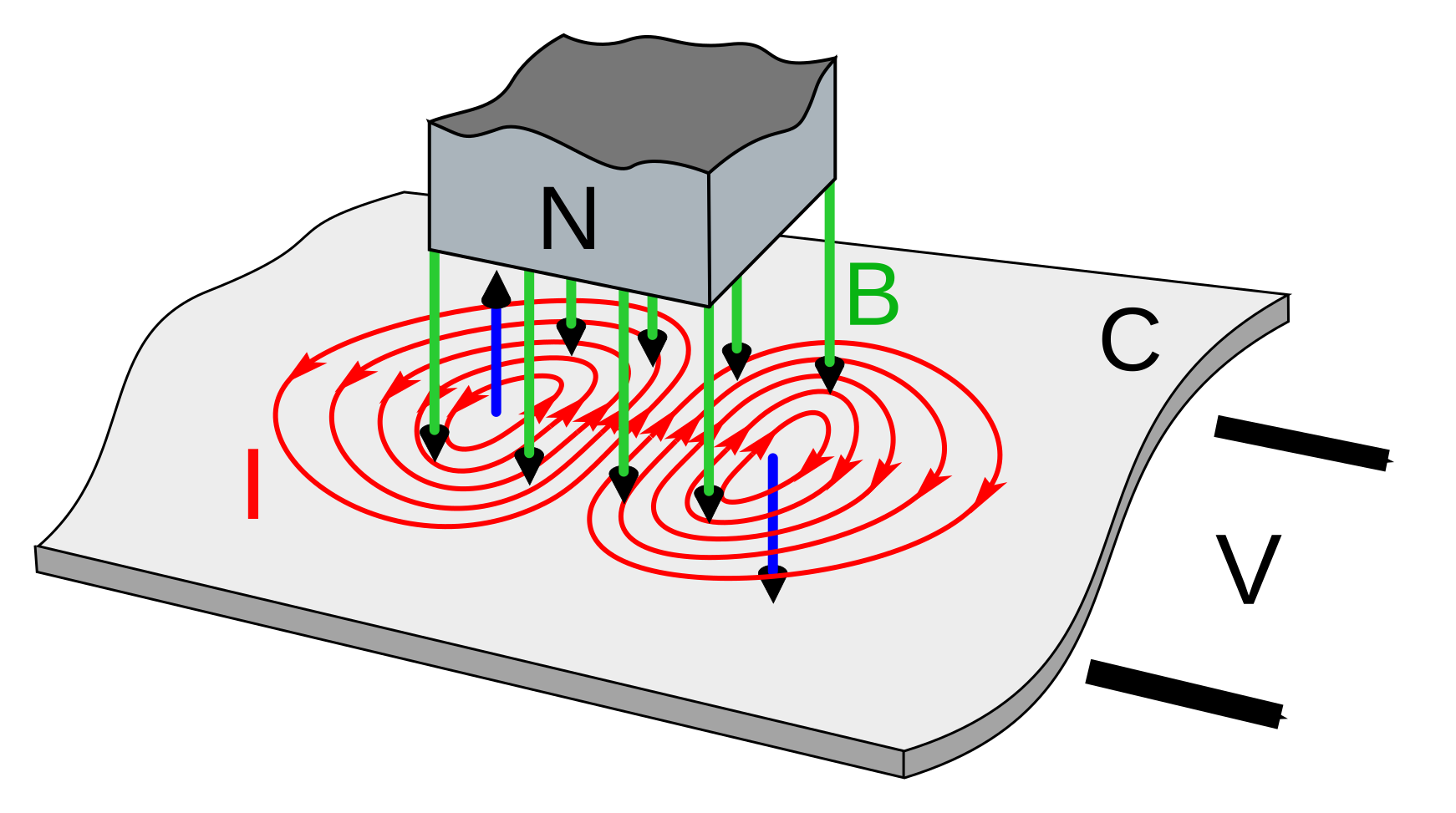
Smart machines flip this around: an electromagnet controls the resistance level, with no iron plates needed. The upsides:
- Zero footprint: a wall unit delivers over a hundred pounds of resistance
- Fine adjustment: not "jump by 5 kg per plate," but App-precise to the decimal
- Dynamic resistance: heavier at the end of the motion, lighter at the start — mimicking a real force curve
- Instant feedback: pull-force data is captured by sensors and turned into a visual training report
A Reddit AMA for the Maiak Go product confirms the trend: a foldable smart cable system claiming 220 lb of resistance at pocket size, with built-in smarts to customize workouts.
EMS Training: Using Electricity Instead of Nerves to Fire the Muscle
Even more "sci-fi" is Electrical Muscle Stimulation (EMS). Wikipedia's EMS entry explains: electrode pads on the skin send electrical pulses that mimic the action potentials your central nervous system normally emits, making the muscle contract passively.
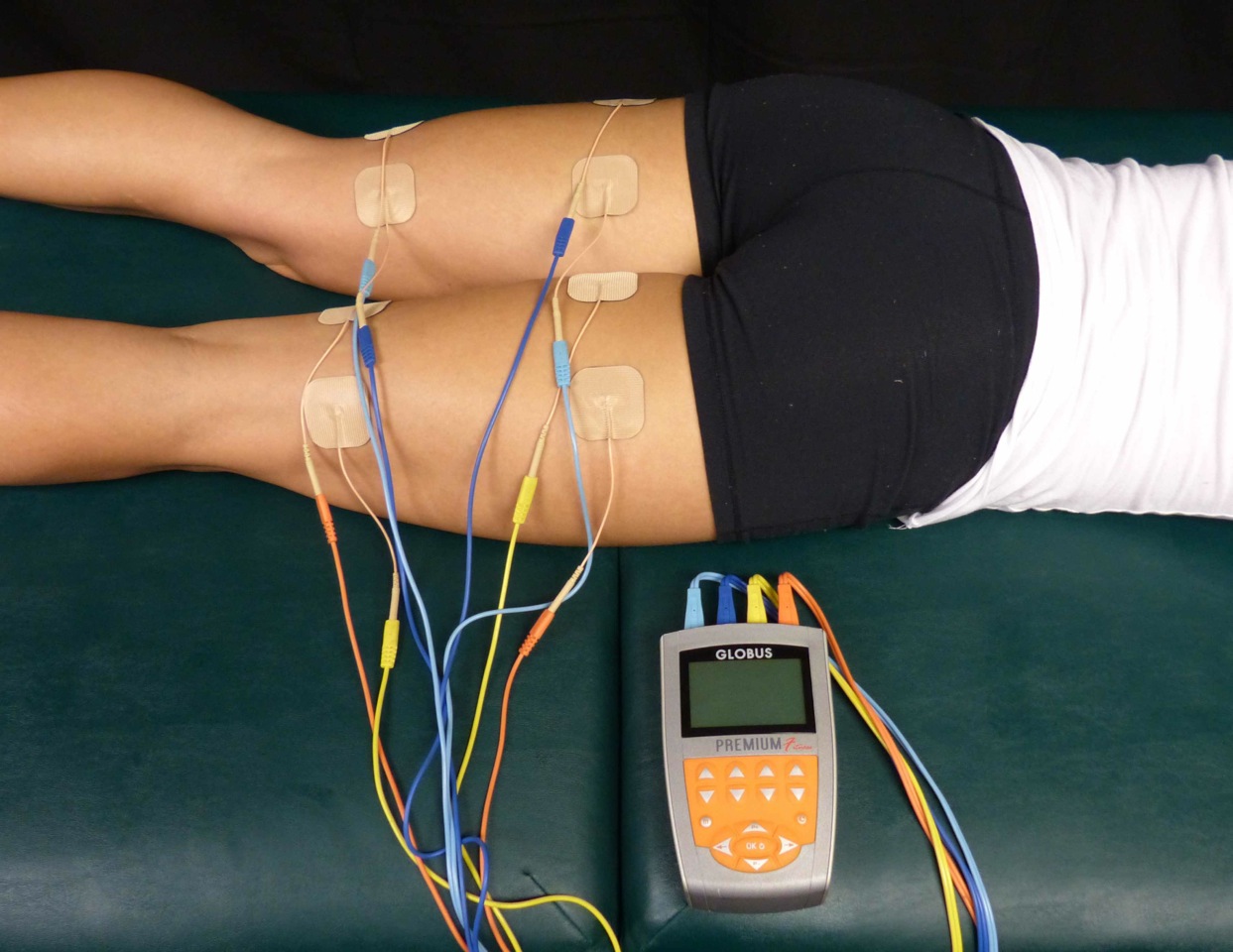
Two application paths:
- Medical rehab: for people who can't move voluntarily due to injury, stroke, or long bed rest, EMS prevents muscle atrophy
- Athletic training: as a complement to voluntary training, it can activate fast-twitch fibers
But Wikipedia also warns: EMS devices are regulated by the U.S. FDA, and "the calorie burning is marginal at best" — it won't replace whole-body exercise for fat loss. It's positioned as a muscle-development and neural-adaptation aid, not a shortcut. Don't fall for "get fit while lying down" marketing.
Going Online: The Machine Becomes a Data Terminal
The final layer of hard tech is connectivity. Connected bikes (Peloton-style) turn training into a social experience: live leaderboards, streamed classes, coach-led momentum. Behind it: sensors (cadence, resistance, heart rate) + cloud algorithms + a content platform.
For the average user, this layer's value isn't the iron — it's consistency. When the machine knows what you did and what you should do next, and nudges you back with gamification or social pressure, your training actually sticks. After all, the best gear does zero good gathering dust.
Takeaway: Hard Tech Makes "Showing Up" Easier
Back to the opening question: why can one smart machine replace a gym? Not because it "lifts better," but because it compresses mechanics, electromagnetics, sensing, and algorithms into a small space, and uses data to solve fitness's hardest part — consistency.
My advice for training at home: first decide whether you need "variable resistance" or "someone to coach you" — the former points to electromagnetic systems, the latter to connected class content. Gear will keep evolving, but progressive overload — the iron law of exercise science — won't be replaced by any black box anytime soon.
Frequently Asked Questions (FAQ)
Q1: Electromagnetic vs. traditional weight stacks — which trains better?They're equivalent on the core principle of progressive overload. Electromagnetic wins on space, fine adjustment, and dynamic curves; weight stacks win on simplicity, durability, low cost, and an intuitive linear feel. Tight on home space? Go electromagnetic. Commercial powerlifting rooms still run on iron.
Q2: Can EMS really build muscle?As a complement, yes. Studies show it can improve quadriceps strength and add some muscle mass, but the evidence grade is low, and it burns very few calories — not a fat-loss tool. Its most solid value is rehab: preventing atrophy in people who can't move voluntarily.
Q3: Why are smart machines so expensive? Can't plain iron do the job?Plain iron absolutely works and lasts longer. Smart machines cost more because of the electromagnet, sensors, cloud algorithms, and content subscriptions. If you have space and discipline, a dumbbell set plus fixed machines is enough; smart gear sells "saves space + keeps you consistent."
Q4: What's the point of connected-fitness data (like Peloton)?Mostly consistency. It logs your weight, reps, and heart rate, and uses leaderboards and live classes to pull you back to train. For many people, social pressure beats willpower. The data won't make you stronger by itself, but it removes the "forgot what to do" gap.
Q5: What is eddy-current resistance, and why skip the iron?An eddy current is a loop of current induced in a conductor moving through a magnetic field; by Lenz's law it creates drag opposing the motion. Smart machines use an electromagnet to control that drag, delivering adjustable resistance with zero iron plates — saving space and enabling precise, dynamic control.
Q6: Will smart home gear fully replace the gym?Not soon. Heavy compound lifts (barbell squat, deadlift) remain the commercial gym's strength; smart units excel at space efficiency, data, and beginner-friendliness. For most people it's a "lower the barrier to start" tool, not a full replacement.
Q7: What traps should I avoid when buying smart fitness gear?Three: exaggerated claims ("get fit lying down," "auto fat loss" — ignore them); subscription lock-in (cheap hardware, monthly class fees); and repair risk (electromagnetic and electronic parts fail more than pure mechanical — check warranty and spare parts).
Q8: How do regular people start without the gear collecting dust?Pick a resistance source that fits your need (electromagnetic for space, iron if you have room), then pick content/community that keeps you going. The key isn't how expensive — it's using it three-plus times a week. Progressive overload plus consistency beats any black box.
Tags: #FitnessTech #SmartGym #ElectromagneticResistance #StrengthTraining #EMS #HomeGym #ExerciseScience #GymEquipment
留言
張貼留言