One-line conclusion: In July 2026, Science magazine published the first general-purpose biomedical AI agent capable of automating laboratory research workflows—AI is no longer just "chatting," it's actually "doing," which could fundamentally redefine what we consider work.
Introduction: The Next Wave of AI
On July 9, 2026, Science magazine published a landmark study: researchers developed a general-purpose biomedical AI agent that could automate entire research workflows—from data analysis to experimental design. This isn't another chatbot—it's an AI agent that can "think, plan, and execute."
On the same day, financial analyst Kobeissi Letter noted on Twitter that AI agents are experiencing explosive growth across both finance and science.
What does this mean? AI is evolving from a "tool" to a "colleague."What Is an AI Agent? How Is It Different From a Chatbot?
Many people still think of "AI" as ChatGPT—a chatbot that answers your questions. But AI agents are fundamentally different:
- Chatbot: You give instructions, it responds. It cannot access your data or perform actions.
- AI Agent: It can access company databases, execute multi-step tasks, and automate entire workflows.
Put simply, a chatbot is like a "reference librarian," while an AI agent is like a "secretary who can research, write reports, and send emails on its own."
The Science study demonstrates this shift perfectly—the AI doesn't just give advice; it directly executes repetitive tasks in biomedical research.
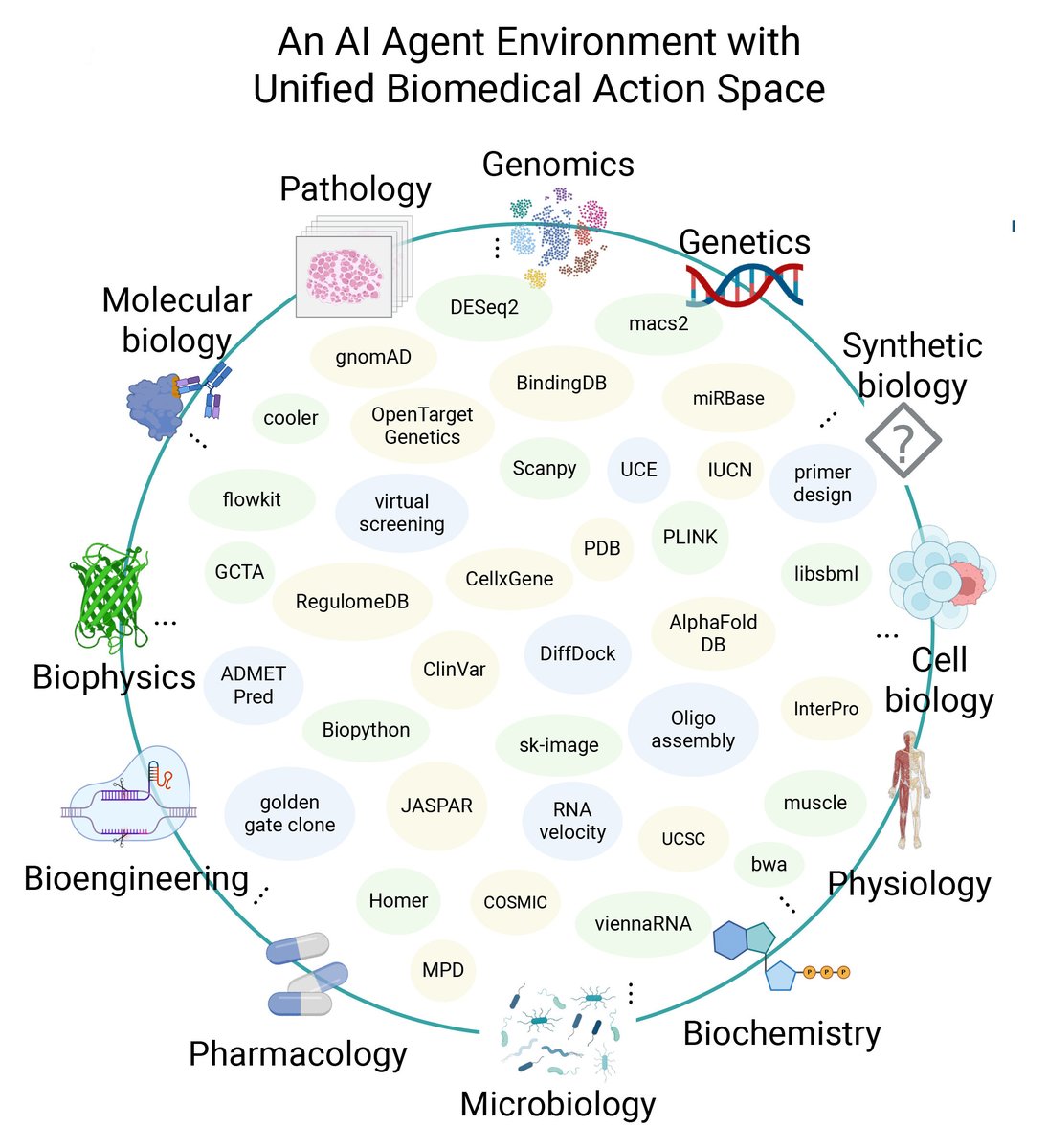 Source: Science Magazine Twitter
The Breakthrough: Agentomics
According to the research, the team developed a system called "Agentomics." Here's how it works:
1. Automatic model generation: Automatically trains specialized AI models from biomedical data
2. Autonomous trial and error: AI agents experiment with different methods, much like human scientists
3. Outperforming human experts: In multiple domains, AI agents found new methods that outperformed human specialists
Let me make this concrete:
- Medical diagnosis: An AI agent can automatically analyze a patient's genetic data, medical history, and lab results, then recommend the optimal treatment plan
- Drug development: From compound screening to clinical trial design, AI agents can automate the entire pipeline
- Software development: AI agents don't just write code—they understand your company's architecture and can automatically fix bugs
 Source: Eric Topol Twitter
What Can AI Agents Do? What Can't They Do?
✅ Currently Happening
- Healthcare research: Automatically analyzing genetic data, designing experimental protocols
- Customer service: Responding to customer inquiries, processing refunds, scheduling appointments
- Software development: Automatically fixing bugs, refactoring code, generating tests
- Financial analysis: Monitoring markets in real time, generating investment recommendation reports
⚠️ Still Experimental
- Complex decisions requiring human oversight (e.g., final confirmation of medical diagnoses)
- Scenarios involving moral judgment (e.g., legal rulings)
- Fields requiring creativity and emotional understanding (e.g., art creation, psychotherapy)
What Does This Mean for You?
If You're an Employee
AI agents are unlikely to replace "all jobs"—they'll most likely replace the "repetitive parts" of jobs. Your work might evolve to:
1. More time for decision-making: AI organizes data; you make the final call
2. More time for creative work: Hand off repetitive tasks to AI, focus on innovation
3. Learning to "manage AI": Future workplace competitiveness hinges on knowing how to give AI clear, effective instructions
If You're an Entrepreneur
AI agents lower the barrier to entry. What once required a team can now be done by one person + AI agents. This means:
- Faster product development cycles
- Lower operational costs
- More opportunities for personal branding
Conclusion: Not Replacement—Evolution
AI agents aren't here to "replace" you—they're here to "augment" you. Just as computers didn't replace mathematicians but enabled them to do more complex calculations, AI agents will let humans focus on higher-value thinking.
The question isn't "Will AI replace my job?" but "Can I learn to use AI agents to do my job better?"
Frequently Asked Questions (FAQ)
Q1: Will AI agents replace my job?A: Unlikely to be a complete replacement. AI agents excel at repetitive, structured tasks. Jobs involving creativity, emotional intelligence, and complex decision-making still require humans.
Q2: How are AI agents different from regular chatbots?A: Chatbots can only "answer questions"; AI agents can "perform tasks." For example, you could have an AI agent automatically analyze your financial statements, generate investment recommendations, or even execute trades.
Q3: What AI agent tools are available now?A: There are already many AI agent tools on the market—customer service automation platforms, programming assistants, financial analysis tools. The Science study marks the beginning of general-purpose AI agents.
Q4: How are AI agents kept safe?A: Most current AI agents still require human oversight, especially in critical fields like healthcare and finance. The research team emphasizes that AI agents are designed to "assist" rather than "replace" human experts.
Q5: When will AI agents become mainstream?A: They're already being applied in specific domains (medical research, customer service). We expect more industry-specific AI agent applications within the next 2-3 years.
Q6: How should I prepare for the AI agent era?A: Learn to collaborate effectively with AI—understand its strengths and limitations, learn to give it clear instructions, and maintain human judgment on critical decisions.
Tags: #AI #AgenticAI #ArtificialIntelligence #TechTrends #Automation #DigitalTransformation #FutureOfWork #AIAgents #ScienceMagazine #AIResearch
留言
張貼留言