Is There a Natural Blood Pressure Medication Hiding in Your Kitchen? New Study Says Eat These Vegetables Daily
One-line conclusion: A May 2026 University of Exeter RCT published in Free Radical Biology and Medicine revealed that specific bacteria on your tongue convert dietary nitrate from vegetables into nitric oxide—a Nobel Prize-winning vasodilator that relaxes blood vessels, with measurable blood pressure drops within 2 weeks and ~5% reduced cardiovascular risk.
What if the most effective blood pressure medication was already sitting in your kitchen?
Not All Vegetables Lower Blood Pressure
Let's start with a surprising truth:
Eating salad doesn't equal lowering blood pressure.If you're eating lettuce, cucumber, and tomatoes—these are perfectly healthy foods, but they do very little for your blood pressure.
The vegetables that actually lower blood pressure must be rich in dietary nitrate—and the nitrate content varies enormously between different vegetables.
 Seven high-nitrate vegetables: spinach, beetroot, arugula, garlic, celery, broccoli, and kale—nature's vascular-clearing agents
The Science: From Tongue to Blood Vessels
In May 2026, the University of Exeter published a randomized controlled trial in Free Radical Biology and Medicine that revealed a remarkable mechanism.
The key to lowering blood pressure begins on your tongue.
The study found that specific bacteria living on the surface of your tongue convert dietary nitrate from vegetables into nitrite, which is further converted into nitric oxide.
What does nitric oxide do?
It is your body's most powerful natural vasodilator.In 1998, three scientists (Furchgott, Ignarro, and Murad) won the Nobel Prize in Medicine for discovering nitric oxide's role in the cardiovascular system. They proved that nitric oxide relaxes the smooth muscle in blood vessel walls, allowing blood to flow more freely—naturally lowering blood pressure.
In other words—the "natural pharmacy" for blood pressure already exists inside your body.
It just needs raw material: dietary nitrate from vegetables.
 University of Exeter RCT: Diagram showing how tongue bacteria convert vegetable nitrate into blood pressure-lowering nitric oxide
The Seven Most Effective Vegetables
Based on current research, these seven vegetables have the highest dietary nitrate content:
- 🥬 Spinach — Very high nitrate. Best steamed, quickly stir-fried, or blended into smoothies
- 🫘 Beetroot — Very high nitrate. Roast, boil, or eat raw in salads. Beetroot juice works within hours
- 🌿 Arugula (Rocket) — Very high nitrate. Best eaten raw in salads (cooking destroys nitrates)
- 🧄 Garlic — High nitrate. Crush and let sit 10 minutes before eating to activate allicin
- 🌱 Celery — High nitrate. Eat raw or juice it
- 🥦 Broccoli — Medium-high nitrate. Steam rather than boil to retain nutrients
- 🥬 Kale — Medium-high nitrate. Great in smoothies or baked as crispy chips
Beyond Vegetables: The DASH Diet
Managing blood pressure involves more than just eating one type of vegetable. The 2025 AHA/ACC hypertension guidelines state clearly that lifestyle intervention is the foundation of therapy.
The most evidence-backed dietary approach is the DASH Diet (Dietary Approaches to Stop Hypertension).
Core principles:
- High potassium: Bananas, potatoes, beans, dark leafy greens
- Low sodium: Under 2,300 mg daily (about one teaspoon of salt)
- High magnesium: Nuts, whole grains, leafy greens
- Moderate protein: Prioritize plant protein and fish
One key metric: the urinary sodium-to-potassium ratio.
A study published in Hypertension Research (June 2026, Kawahara M et al.) with 8 years of follow-up found that even in populations with already low sodium-to-potassium ratios, further improvement was significantly associated with blood pressure reduction.
In plain language: it's never too late to start eating more vegetables, and any improvement helps.
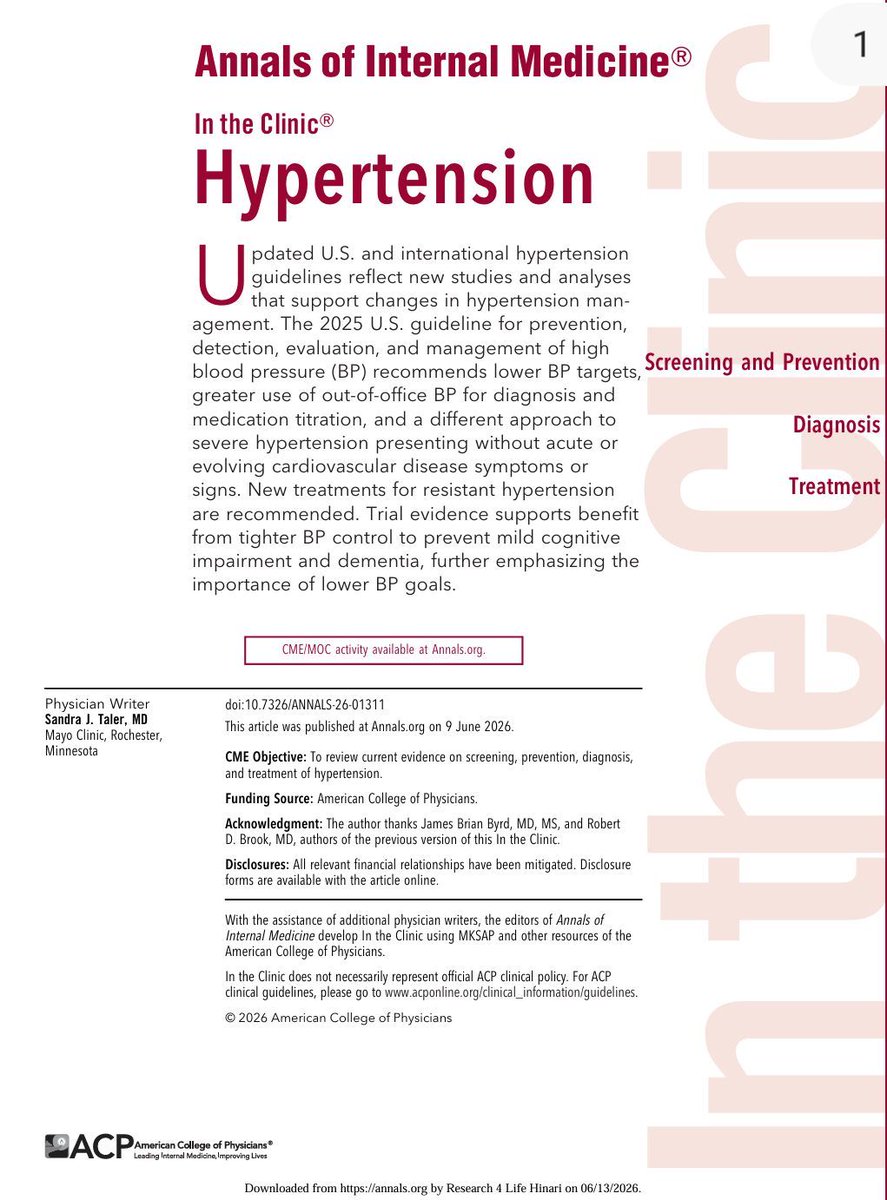 2026 AHA/ACC hypertension guideline update: Lifestyle intervention remains the cornerstone of therapy
Five Key Updates in Hypertension Management (2026)
Beyond diet, here are the major shifts in blood pressure treatment this year:
1. Office readings are no longer enough — Ambulatory blood pressure monitoring is now the gold standard for diagnosis and medication adjustment
2. Stricter targets — Most patients should aim <130/80 mmHg; high-risk patients may target <120 mmHg (if tolerated)
3. Personalized treatment — The new PREVENT risk calculator replaces pure BP numbers with comprehensive cardiovascular risk assessment
4. New drug for resistant hypertension — Aprocitentan (a dual endothelin receptor antagonist) offers hope for treatment-resistant cases
5. Lifestyle is always foundation — DASH diet, exercise, weight loss, sodium restriction—no medication can replace these
What You Can Do Starting Today
You don't need to do everything at once. Start with three small changes:
1. Eat a handful of dark leafy greens daily — Spinach, kale, arugula. Aim for 2-3 servings (about one fist-sized portion each)
2. Try beetroot — Roast it, juice it, or add it to salads. Studies show beetroot juice can lower blood pressure within 3 hours of consumption
3. Get a home blood pressure monitor — Hypertension is called the "silent killer" because most people have no symptoms. The 2025 guidelines strongly recommend home monitoring
Important: If you are already on blood pressure medication, do NOT stop taking it. Dietary changes can complement and potentially reduce medication needs, but they cannot replace prescribed drugs. Always discuss dietary changes with your doctor.Frequently Asked Questions (FAQ)
Q1: How long does it take for vegetable-based blood pressure reduction to work?A1: Studies show that high-nitrate vegetables like beetroot can lower blood pressure within 3 hours of consumption. For sustained effects (~5% cardiovascular risk reduction), daily consumption for about 2 weeks is needed.
Q2: How many vegetables should I eat daily?A2: The World Health Organization recommends at least 5 servings of fruits and vegetables daily (about 400 grams). At least 2-3 servings should be dark leafy greens or high-nitrate vegetables. One serving is about the size of your fist.
Q3: Do cooked vegetables still work?A3: Yes, but less effectively. Nitrates are water-soluble—boiling can remove 50-70%. Steam, microwave, or quick stir-fry instead of boiling. Eat nitrate-rich vegetables raw when possible (like arugula in salads).
Q4: Are only these seven vegetables effective?A4: These seven have the highest nitrate content, but ALL vegetables benefit cardiovascular health. The key is reaching 5+ daily servings total, while prioritizing high-nitrate options.
Q5: Can I eat too many high-nitrate vegetables?A5: For healthy adults, nitrate from vegetables is extremely safe. The vitamin C in vegetables simultaneously inhibits conversion of nitrite to harmful nitrosamines. The only groups needing caution are infants (under 6 months) and individuals with specific stomach conditions.
Q6: Can I use diet alone instead of medication?A6: No. Dietary changes are complementary, not alternative treatment. For mild hypertension (systolic 130-139 mmHg), diet and exercise may prevent the need for medication. For moderate to severe hypertension, medication remains necessary.
Q7: Which is better—DASH diet or Mediterranean diet?A7: Both are proven beneficial for cardiovascular health. DASH is slightly superior for blood pressure (due to stronger sodium restriction), while the Mediterranean diet offers more comprehensive cardiovascular protection. The best approach combines elements of both.
Tags: #Hypertension #BloodPressure #DietaryNitrate #NitricOxide #DASHDiet #Vegetables #HeartHealth #Nutrition
留言
張貼留言