One-line conclusion: Scientists discovered a bacterial defense mechanism called DRT3 that synthesizes DNA without any template — overturning the central dogma that DNA must always be copied from existing DNA, and potentially unlocking a new era of genetic engineering.
In July 2026, a study published in Science shocked the biology community. Researchers found that a bacterial defense system called DRT3 can synthesize entirely new DNA strands with no template DNA at all. This directly challenges a fundamental principle of biology that has stood for over a century — that DNA replication always requires an existing template.
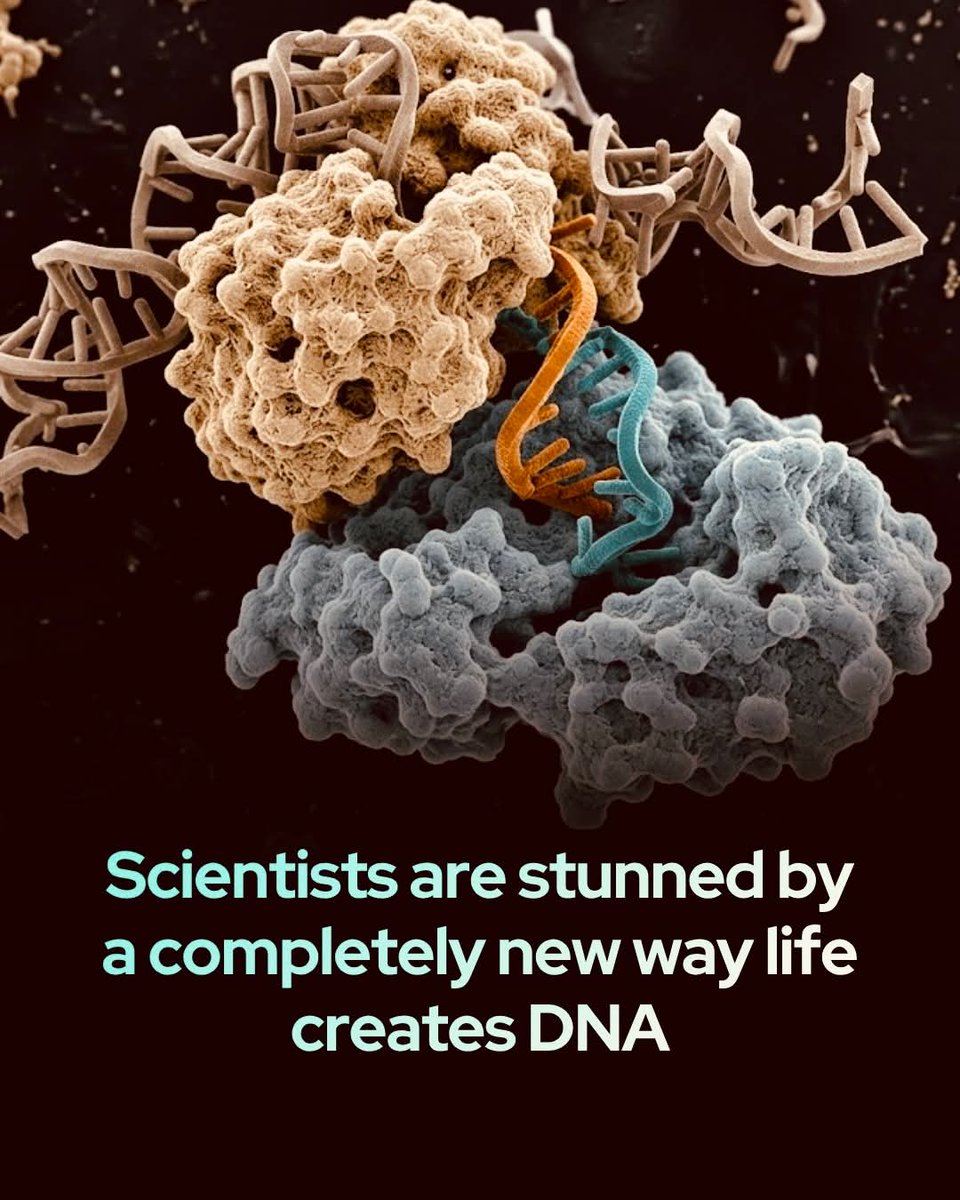
The principle that "DNA must be copied from a template" is a cornerstone of biology. Since Watson and Crick discovered the double helix structure of DNA in 1953, all known forms of DNA synthesis — whether natural DNA replication inside cells or lab techniques like PCR — require an existing DNA or RNA strand as a template. DRT3 breaks this rule entirely.
DRT3 is a defense system bacteria use to fight viral infections (bacteriophages). When a bacterium detects a viral infection, the DRT3 system activates and begins synthesizing random-sequence DNA. These random DNA fragments disrupt the virus's replication cycle, stopping the infection from spreading. In essence, bacteria fight viruses by "making random DNA without a template."

The significance of this discovery lies in its revelation of a new type of enzyme activity — template-free DNA polymerase. While terminal deoxynucleotidyl transferase (TdT) was previously known to add nucleotides without a template, it is inefficient and produces uncontrolled sequences. DRT3 represents a fundamentally different, more efficient mechanism.
The potential applications are vast. In synthetic biology, the ability to synthesize arbitrary DNA sequences from scratch could dramatically reduce the cost and time of designing genetic circuits. This could accelerate gene therapy, protein engineering, and biomanufacturing.

Many scientists are comparing DRT3 to CRISPR-Cas9. CRISPR was originally a bacterial immune system that was repurposed into a revolutionary gene-editing tool. DRT3 is also a bacterial defense mechanism that could potentially be repurposed into a powerful biotech tool. If successful, it could herald a new era of "writing DNA from scratch."
However, this research is still at an early stage. The function of DRT3 has only been verified in bacteria. Transforming this mechanism into a practical tool will require years of additional research. But just like CRISPR a decade ago, today's small discovery could be the foundation for the next biotechnology revolution.
Frequently Asked Questions (FAQ)
Q: What does "template-free DNA synthesis" mean?A: Traditionally, DNA replication requires an existing DNA strand as a template for base pairing. DRT3 can synthesize DNA chains directly from nucleotide building blocks with no template needed.
Q: How could DRT3 benefit humans?A: If successfully developed into a tool, it could enable faster, cheaper gene synthesis for applications including gene therapy, protein engineering, and synthetic biology.
Q: How is DRT3 related to CRISPR?A: Both are bacterial defense systems. CRISPR was repurposed for gene editing; DRT3 could be repurposed for gene synthesis — complementary tools rather than competitors.
Q: Will DRT3 replace CRISPR?A: No. CRISPR excels at "editing" DNA; DRT3 excels at "writing" DNA. They would be complementary rather than competitive.
Q: When could this technology reach human medicine?A: Currently only verified in bacteria. Human applications are years away, but the proof of concept lays important groundwork.
#DNASynthesis #DRT3 #SyntheticBiology #CRISPR #BacterialDefense
留言
張貼留言