What Challenges Does the US Social Security Trust Fund Face? The 2033 Crisis and the Hard Choices of Retirement Reform
One-line takeaway: The US Social Security trust fund is projected to run dry around 2033 — and if Congress does nothing, benefits for roughly 70 million recipients would be automatically cut by about 21-23%. Every fix on the table, from raising the retirement age to lifting the payroll tax cap, carries political costs that have kept reform frozen for decades.

The US Social Security program is one of the largest retirement programs in the world, paying monthly benefits to more than 67 million retirees, disabled workers, and survivors. The latest annual trustees report has reignited debate over a nearly 90-year-old pay-as-you-go system now facing fundamental demographic pressure: the baby boom generation is retiring en masse while workforce growth slows — fewer workers paying in, more retirees drawing out.
How the Trust Fund Works
Social Security runs on payroll taxes: taxes paid by today's workers directly fund benefits for today's retirees. When revenue exceeds spending, the surplus flows into two trust funds (Old-Age and Survivors Insurance, and Disability Insurance) invested in special US Treasury securities. When revenue falls short, the program redeems those bonds to cover the gap.
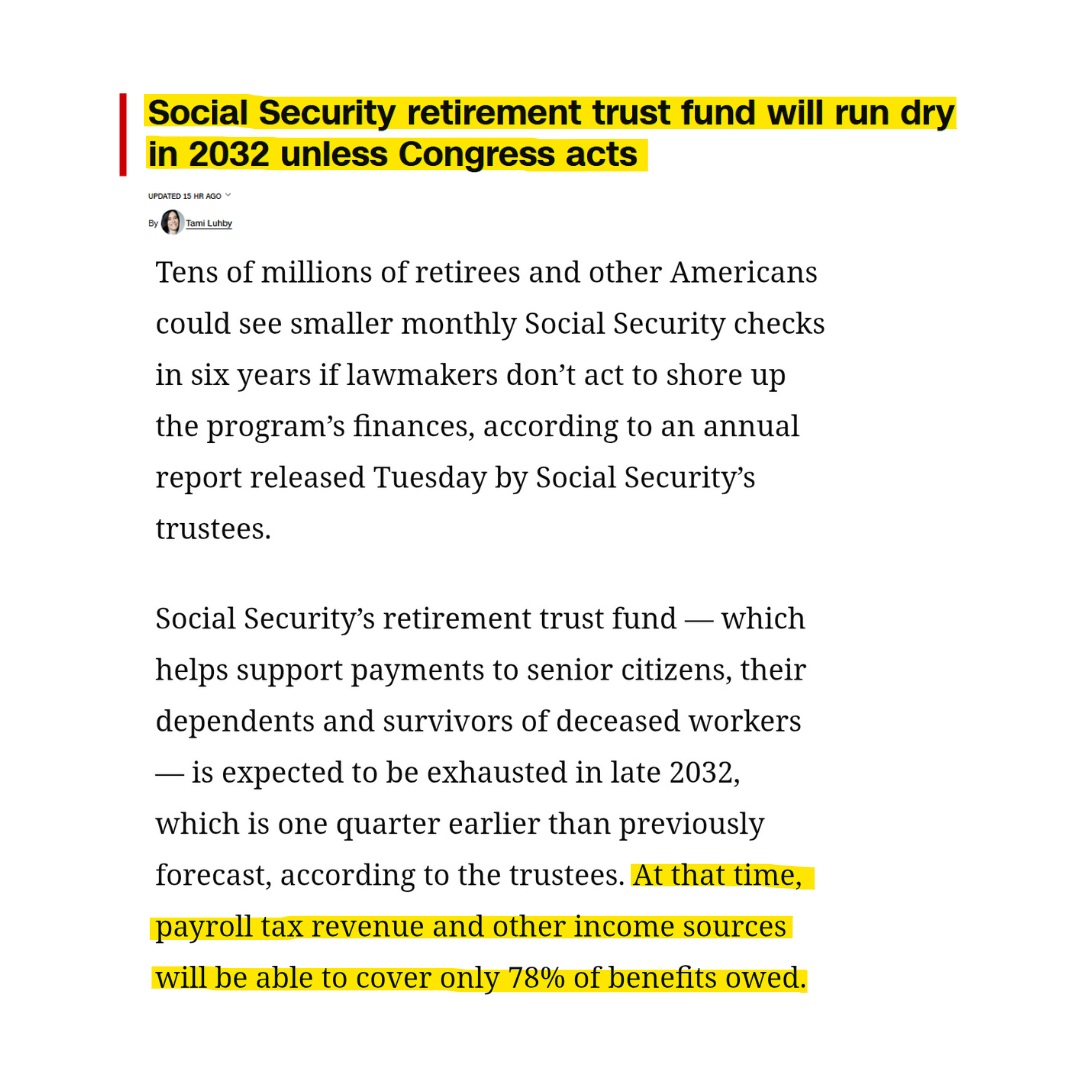
The problem: since 2010, annual program costs have exceeded payroll tax income, with interest earnings and bond redemptions covering the difference. According to the trustees' projections, the trust fund will be depleted around 2033 — not "bankruptcy," but an account balance hitting zero.
What Happens When the Fund Runs Out?
A common misconception is that benefits drop to zero. In reality, as long as workers keep paying payroll taxes, the program still has income — just not enough to cover all promised benefits. Official projections show tax revenue would cover only about 77-79% of scheduled benefits, meaning every recipient would face an automatic cut of roughly 21-23%.
That cut would trigger automatically under current law, without a Congressional vote — which is precisely why observers expect lawmakers to intervene before the deadline rather than let tens of millions of voters absorb a 20% income drop at once.

Possible Reform Options
America has rescued this program before: in 1983, the Reagan administration adopted the Greenspan Commission's recommendations, gradually raising the retirement age to 67 and accelerating payroll tax increases. Today's menu of options includes:
- Raising the payroll tax rate: currently 12.4% combined between employer and employee; even a small increase would significantly improve finances
- Removing or raising the taxable cap: wages above a threshold (~$170,000) currently escape payroll taxes; eliminating the cap would make high earners contribute on all income
- Raising the retirement age: further delaying full benefits reduces total years of payout
- Adjusting the benefit formula: changing how cost-of-living adjustments (COLA) are calculated, or trimming benefits for higher earners
Every option has clear winners and losers — which is why reform has stalled. Any plan touches a specific voting bloc, and in a polarized political environment, consensus has proven elusive.
What It Means for Personal Retirement Planning
For readers worldwide watching US fiscal policy — and American workers themselves — this standoff offers several lessons:
1. Never treat Social Security as your entire retirement income: it was designed to replace only about 40% of pre-retirement earnings, and reform uncertainty makes diversified savings even more essential
2. Prioritize 401(k)s and individual retirement accounts: despite market volatility, long-term compound private savings remain the most reliable buffer against policy changes
3. Watch for reform legislation: whether the fix is higher taxes, a later retirement age, or benefit cuts, knowing years in advance allows planning adjustments — the 1983 reform was phased in over decades
FAQ
Q1: What is the current ratio of income to spending for Social Security?A: Annual program costs now exceed payroll tax income, with trust fund interest and bond redemptions filling the gap. The latest trustees report projects the fund will be depleted around 2033, after which tax revenue would cover only about 77-79% of scheduled benefits.
Q2: Will benefits disappear when the fund runs out?A: No. As long as workers pay payroll taxes, the program has income — just not enough for full benefits. Without Congressional action, benefits would be automatically cut by about 21-23%.
Q3: What reform options are on the table?A: The main options include raising the payroll tax rate, removing or raising the taxable wage cap, increasing the retirement age, and adjusting the benefit formula or COLA mechanism. Historical experience (the 1983 reform) suggests a combined package phased in over time.
Q4: Will younger generations receive Social Security?A: The program won't disappear under current law, but benefit levels depend on when and how Congress acts. Most projections suggest younger workers will still receive benefits — possibly at a higher retirement age or with an adjusted formula.
Q5: How should individuals prepare for this uncertainty?A: The core principle is diversifying retirement income sources: employer plans, personal savings, and investment portfolios shouldn't rely on a single government benefit, and it pays to follow reform legislation so you can adjust early.
Sources: SSA Trustees Report, Wikipedia (Social Security Trust Fund), X (Twitter) financial analysis
留言
張貼留言