One-sentence takeaway: NASA has funded a concept called SPARK — spherical flying robots using solid-state ion thrusters to explore the caves of Titan, Saturn's most Earth-like moon, where caves may hold key clues in the search for life.
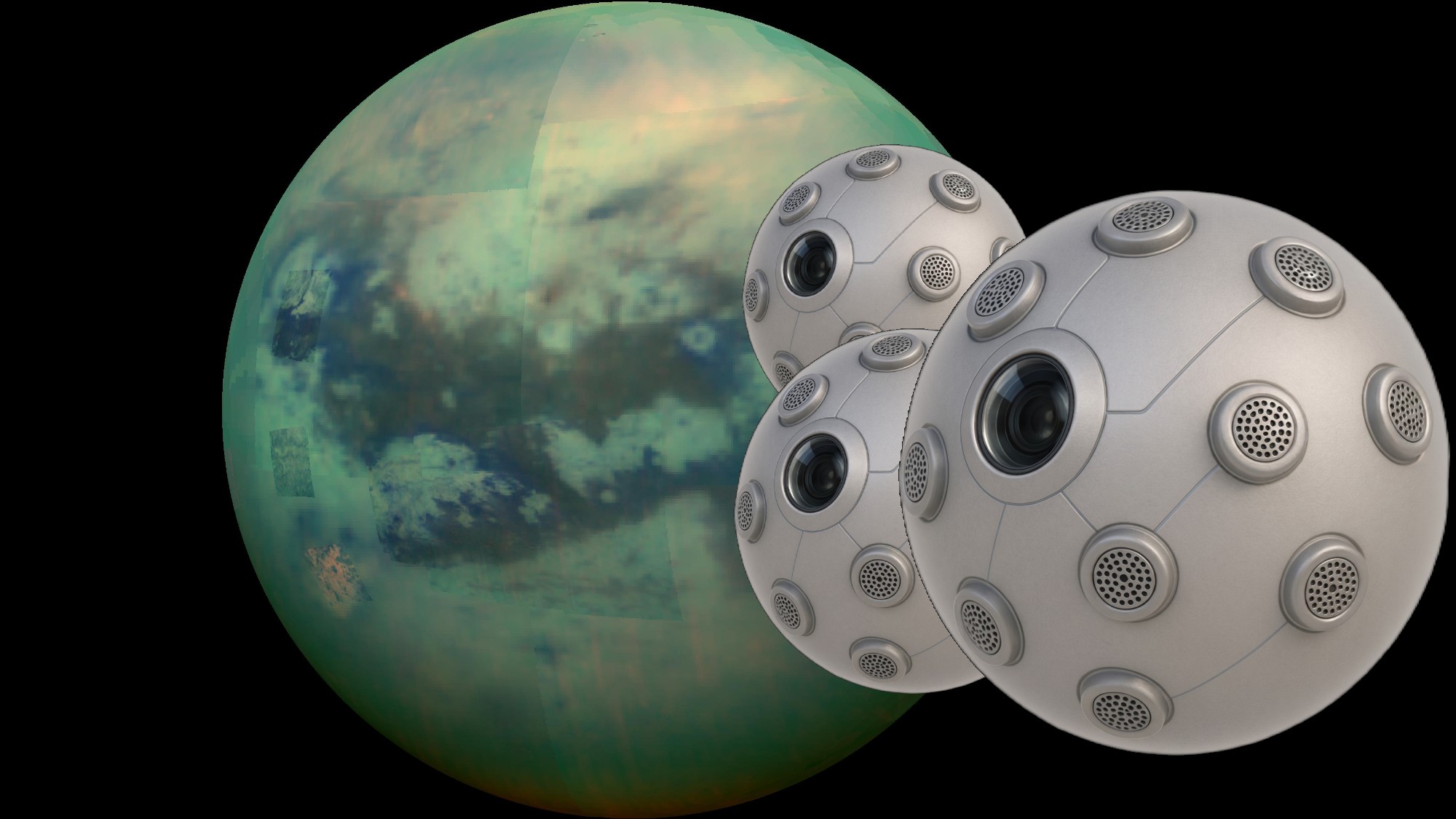
Titan: The Most Earth-like Moon in the Solar System
Saturn's moon Titan is one of the most unusual bodies in the solar system: it has a thick atmosphere, rivers, lakes, and even seas — except they're filled with liquid methane and ethane rather than water. NASA calls it the most Earth-like moon, making it a prime target in the search for life's building blocks.
Titan also features strange "karst" terrain, riddled with underground sinkholes and caves. As Space.com reported on August 16, that terrain is nearly impossible for rovers to traverse — but flying vehicles might succeed where wheels fail.
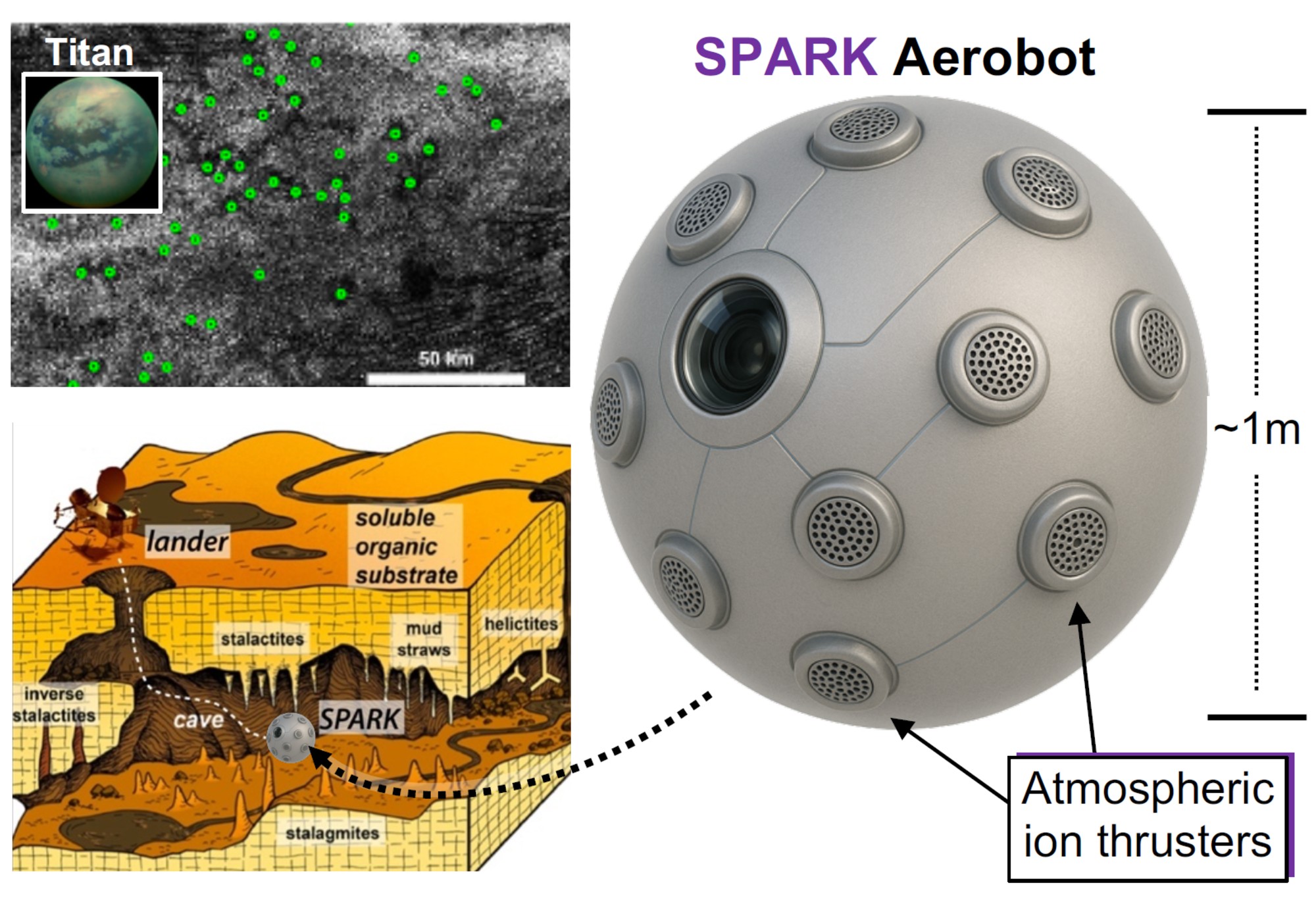
SPARK: Spherical Robots Flying on Solid-State Ion Thrusters
A team led by Daniel Drew, assistant professor at the University of Hawaiʻi at Mānoa, has won an early-stage grant from NASA's Innovative Advanced Concepts (NIAC) program to develop SPARK — short for "Solid-state Propulsion for Autonomous Reconnaissance of Karst."
The key technology is electrohydrodynamic (EHD) ion propulsion: high voltage ionizes air to generate thrust. The advantages are striking — it's virtually silent, mechanically simple (solid-state, few moving parts), and produces no propeller downwash. That last point matters enormously on Titan: scientists don't want the robot's airflow disturbing the precious hydrocarbon deposits they're trying to study.
From Hobbyist "Lifters" to a NASA Mission
Drew's origin story is delightfully unconventional. In graduate school he stumbled onto the hobbyist "lifter" community — triangular frames of balsa wood, magnet wire, and aluminum foil that levitate when wired to a 40,000-volt flyback transformer salvaged from a microwave or CRT monitor. He found that NASA and the Air Force had done similar experiments decades earlier, and ran with the idea, eventually building centimeter-scale ion-propelled flying robots and demonstrating the first ion-propelled micro-hovercraft.
When Could It Fly? The Dragonfly Question
SPARK is just starting its nine-month NIAC Phase 1 study. To get closer to reality, it would need to pass Phase 2, which can last up to two years. Drew admits it's unclear whether SPARK can make it in time for NASA's Dragonfly mission — a rotorcraft headed to Titan, targeted for a 2028 launch. But if Dragonfly is delayed, SPARK could join the late-mission lineup.
Drew hopes SPARK can be a cave-exploration trailblazer in the same spirit as Mars' Ingenuity helicopter — a demo mission that ultimately flew 72 times, more than ten times what was expected. From the Moon to Titan's caves, NASA keeps pushing the boundaries of exploration with the most disruptive vehicle designs imaginable.
FAQ
Q1: Why are Titan's caves important?Titan has the most Earth-like surface in the solar system, and its caves may preserve pristine organic chemistry shielded from radiation — a key location for studying prebiotic chemistry and potential signs of life.
Q2: When could SPARK Aerobots actually launch?It's just beginning the ~9-month NIAC Phase 1, and would need to pass Phase 2 (up to two years). If NASA's Dragonfly mission (targeted for 2028) is delayed, SPARK could have a chance to join the later mission.
Q3: Why not use conventional propellers?Propellers create strong downwash that could disturb the hydrocarbon deposits scientists want to study. SPARK's solid-state ion propulsion is nearly silent, has no downwash, and can operate in extreme cryogenic conditions.
Q4: What's the advantage of a spherical design?The sphere is rugged and impact-tolerant, ideal for flying and bouncing through narrow, irregular caves. Multiple Aerobots could also swarm, exploring different passages simultaneously.
Q5: Is this technology useful on Earth?Drew notes applications like all-electric aircraft, indoor drones, and micro-flying swarms — but EHD propulsion is still far less efficient than conventional methods, so near-term use is limited to special environments like caves and low-gravity worlds.
Sources: Space.com (2026/8/16), NASA NIAC, arXiv
留言
張貼留言