Germany's Pension Reform Arrives Next Year: Why Are Retirement Systems Worldwide Rewriting the Rules?
One-sentence takeaway: Germany is shifting from pay-as-you-go to capital-market retirement — starting in 2027, the state will subsidize brokerage accounts instead of insurance products. Retirement systems globally are moving toward "later payouts, more self-funding," and the sooner individuals start compounding, the more choices they'll have.

From Bismarck to ETFs: A Pension Overhaul Two Decades in the Making
Germany's pension system has long been the textbook example of the "Bismarck model": current workers pay contributions that go directly to retirees — a pay-as-you-go system. It has supported Germany for over a century, but now faces its toughest test yet: demographics.
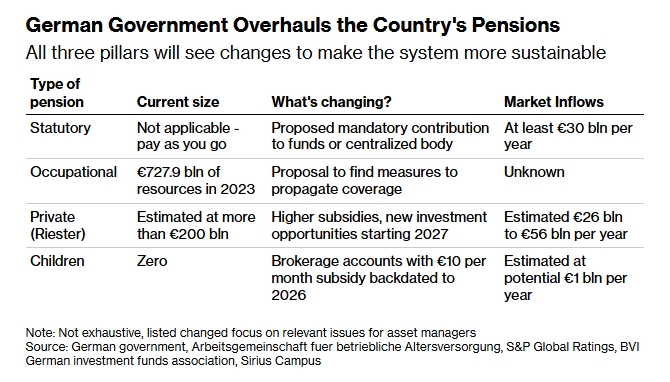
Bloomberg reported on August 15 that Germany is rolling out a package of measures that amounts to its biggest pension overhaul in more than two decades. The direction is simple: move retirement savings from guaranteed insurance products toward capital-market investment accounts. Media are calling it "from Bismarck to ETFs."

From 2027: The State Subsidizes Brokerage Accounts
The most critical change takes effect in January 2027: the state stops subsidizing insurance-based products and starts subsidizing retirement brokerage accounts. It's essentially a German version of the U.S. 401(k) — standard accounts will cap fees at 1%, making low-cost ETFs the big winners.
Private pension assets are projected to double to around €500 billion within a decade. For German savers accustomed to guaranteed payouts, this is a huge cultural shift: retirement outcomes move from "state guarantee" to "market performance."
Why Is Everyone Rewriting the Rules?
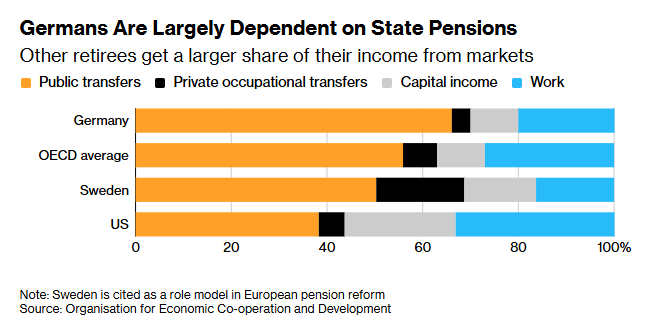
Germany isn't alone. The common driver is demographics: within a decade, Germany will have roughly two working-age people supporting every retiree. Pay-as-you-go systems inevitably strain under that structure, so countries are converging on three strategies:
1. Later payouts: raising retirement ages and trimming benefit levels;
2. More self-funding: shifting from defined benefit to defined contribution, with individuals bearing investment risk;
3. Capital-market orientation: using tax incentives to steer retirement savings into stocks, ETFs, and other long-term assets.
This wave of reform has also reignited the debate over how much people actually need to retire. One 2026 survey estimated retirees' real monthly spending at roughly NT$70,000, requiring savings of about NT$19 million for a comfortable retirement — wherever you live, inflation and longevity risk keep pushing the bar higher.
Three Lessons for Everyone
1. Don't rely on the state alone: the direction of pension reform everywhere is the same — state benefits will keep shrinking, and personal preparation matters more.
2. Use capital markets: low-fee ETFs and long-term compounding remain among the most effective tools against inflation.
3. Start as early as possible: the key variable in retirement planning isn't the amount — it's time. The same goal requires a multiple of the monthly contribution if you start at 45 instead of 25.
FAQ
Q1: What exactly changes in Germany's pension reform?The core shift is from pay-as-you-go to capital-market retirement: from 2027 the state subsidizes retirement brokerage accounts instead of insurance products, standard accounts cap fees at 1%, and private pension assets target doubling to about €500 billion within a decade.
Q2: Why is Germany reforming?Demographics. Within a decade Germany will have about two working-age people supporting each retiree, making pay-as-you-go unsustainable. Retirement savings must grow through capital markets instead.
Q3: Lump sum or monthly pension — which is better?There's no universal answer; it depends on tax rates, life expectancy, and investing discipline. A lump sum suits disciplined investors, while monthly payments provide stable cash flow — most people combine both.
Q4: How should individuals start preparing for retirement?Three steps: estimate the target amount (roughly 20–25× annual spending), invest steadily in low-cost index ETFs, and review and rebalance periodically. The key is starting early so compounding can work.
Q5: What's the common lesson from pension reforms worldwide?The global trend is consistent: later payouts, more self-funding, and capital-market orientation. The state-guaranteed share will keep shrinking, so individuals must treat retirement preparation as their own responsibility, using long-term investing to fight inflation and longevity risk.
Sources: Bloomberg (2026/8/15), Business Insider, Economic Daily News (2026/8/16)
留言
張貼留言