One-line conclusion: US 30-year fixed mortgage rates have hit 6.46%, the highest in nearly a year, with mortgage purchase applications declining in 4 of the last 5 weeks — and this doesn't just affect American homebuyers, but indirectly impacts real estate markets and capital flows in Asia as well.
The Rising Rate Reality
On July 15, 2026, the US mortgage market crossed an uncomfortable threshold: the 30-year fixed mortgage rate climbed to 6.46%, the highest level in nearly a year. This isn't a sudden spike — rates have been gradually rising from 5.8% over the past month, quietly eroding homebuyer purchasing power.

While 6.46% is far below the 18% highs of the 1980s, for a generation that got used to 3-4% rates, this is a psychological shock.
How Much Have Rates Actually Risen?
According to Zillow's lender marketplace data for July 15:
- 30-year fixed: 6.46% (+4 bps)
- 20-year fixed: 6.32% (+13 bps)
- 15-year fixed: 5.86% (-6 bps)
- 5/1 ARM: 6.65% (+8 bps)
- 30-year VA: 5.93%
On a $500,000 home with 20% down:
- At 4% (2024 low): monthly payment of $1,909
- At 6.46% (today): monthly payment of $2,516
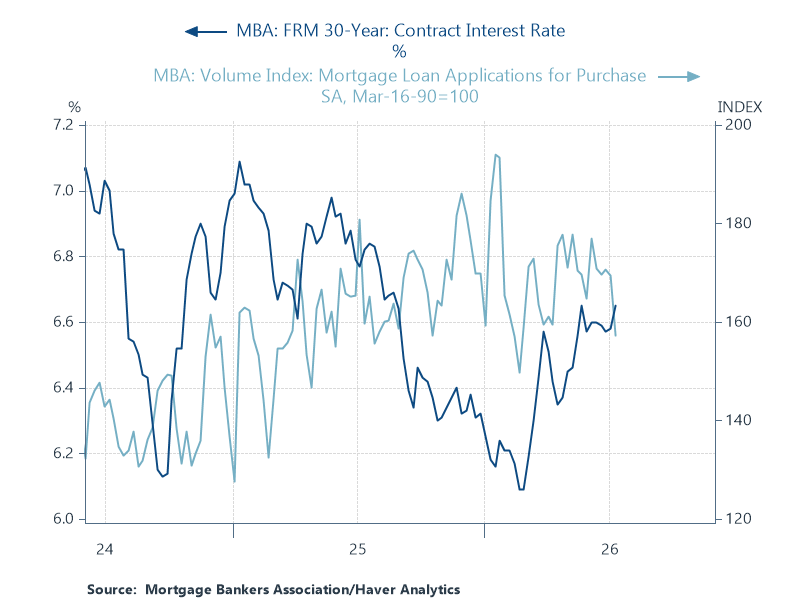
Renaissance Macro reports that purchase mortgage applications fell 7.3% in the week ending July 10 — the 4th decline in 5 weeks. Over the past year, purchase applications are down 1.7%.
Why Are Rates Surging?
US mortgage rates don't track the Fed's policy rate directly — they follow the 10-year Treasury yield. Since June 2026, the 10-year yield has climbed from 4.2% to roughly 4.5%, driven by three factors:
1. Sticky inflation: While June's CPI and PPI both posted their biggest monthly drops since April 2025 (crashing Fed rate hike odds to just 4%), the bond market remains skeptical that inflation is sustainably cooling. 2. Fiscal deficit & bond supply: The US government continues issuing massive amounts of new debt. More supply = lower bond prices = higher yields. This structural factor won't disappear soon. 3. Iran conflict & energy prices: The US military engagement with Iran since early July has pushed up energy prices and inflation expectations. While safe-haven flows into Treasuries push yields down, the net effect is still upward.The Real Impact on American Homebuyers
Purchasing Power Eroded by $75,000
Every 1 percentage point change in mortgage rates affects purchasing power by roughly $30,000. From 4% to 6.46%, that's a $75,000+ loss in what the same monthly budget can afford.
The Lock-In Effect
Homeowners who locked in 3-4% rates refuse to sell and buy a new home (at 6.46%). This has pushed existing home inventory to historic lows, creating a bizarre market where prices stay elevated but transaction volumes collapse.
What Does This Mean for Taiwan and Hong Kong?
For Taiwan
Taiwan's mortgage rates sit at roughly 2.0–2.5% (big five banks average), well below US levels. But high US rates still matter:
- Capital outflow: When US risk-free rates (Treasuries) hit 4.5%, global capital flows out of emerging markets toward US dollar assets, potentially weakening the TWD and raising import costs.
- Central bank pressure: If capital outflows accelerate, Taiwan's central bank may be forced to raise policy rates to defend the currency — which would directly push up local mortgage rates.
For Hong Kong
Hong Kong mortgages are tied to HIBOR, which is closely linked to US rates. With US rates staying high, Hong Kong's effective mortgage rates (roughly 3.5–4.5%) won't decrease anytime soon. HKMA data shows negative equity cases are already on the rise.

Kobeissi Letter: CPI posted its biggest monthly decline since April 2020, crashing the probability of a July Fed rate hike to just 8%.
What's Next?
Short-term (H2 2026): If inflation keeps cooling, markets may price in rate cuts by late 2026 / early 2027. Mortgage rates could ease to the 5.5-6.0% range. Medium-term (2027): The wildcard is whether the US enters a recession. If the economy weakens, rates will drop quickly — but that's bad news, driven by rising unemployment and a deeper housing downturn.Investor Takeaways
1. Don't wait for the "absolute bottom" — you can always refinance later
2. Lock in a 30-year fixed rate now; avoid ARMs in this environment
3. Watch the Fed's July 29 meeting — a clear "rate hike cycle over" signal could send mortgage rates lower immediately
FAQ
Q1: Will US mortgage rates keep rising?
They could nudge to 6.5–7%, but cooling inflation should bring them down in H2 2026. The Fed's July 29 meeting is key.
Q2: Will Taiwan's mortgage rates follow the US up?
Not directly, but capital outflow pressuring the TWD could force Taiwan's central bank into a defensive rate hike.
Q3: What should Hong Kong homeowners worry about most?
Negative equity risk. When high rates, falling prices, and a weak economy converge, highly leveraged property owners feel the most pain.
Q4: Is now a good time to buy a home?
For owner-occupiers with stable income and affordable payments: yes, always. For investors: not in a high-rate, high-price environment.
Q5: How long after a US rate cut would Asia benefit?
Typically a 3-6 month lag. Rate cut expectations show up in bond markets first, then mortgage markets.
Q6: Why are ARMs riskier right now?
ARMs offer fixed low rates for the first few years, then adjust. If rates stay elevated, your payment could jump significantly.
Q7: 30-year vs 15-year mortgage?
30-year has lower monthly payments but higher total interest. With the spread at just 0.6%, 30-year gives you more cash flow flexibility.
Q8: How do US mortgage rates affect stocks?
Capital rotates from risk assets to safe assets (Treasuries), pressuring stocks. But cooling inflation → rate cut expectations → risk assets bounce back. This push-pull is the market's core tension right now.
Tags: #USMortgage #MortgageRates #FederalReserve #InterestRates #TaiwanRealEstate #HongKongProperty #RealEstateInvesting #Inflation #Finance
留言
張貼留言