One-line conclusion: Feeling extremely sleepy after meals isn't just "normal fullness" — when it comes with cold sweats, dizziness, and happens daily, it could signal diabetes, heart failure, post-meal hypotension, or kidney disease.
Why Do We Get Sleepy After Eating?
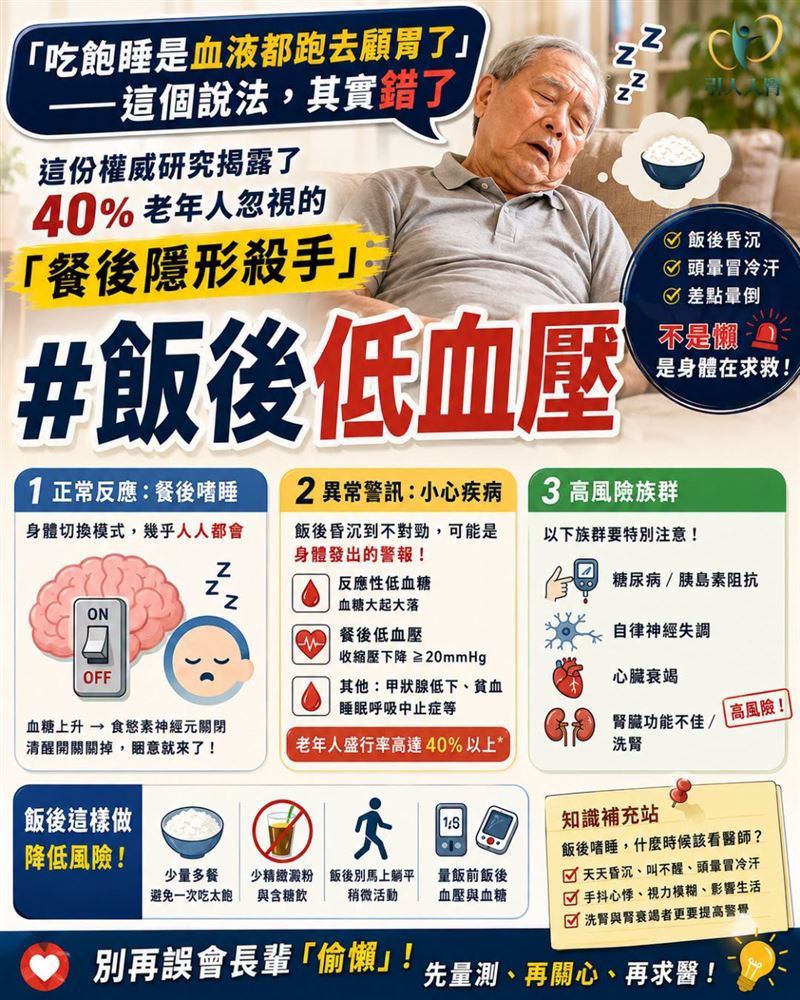
Post-meal sleepiness — medically called postprandial somnolence — typically hits 30 minutes to 2 hours after eating and can last 3-4 hours.
The culprit? Orexin neurons in your brain. These cells keep you alert and focused, but they're very sensitive to blood sugar. When glucose rises after a meal, orexin neurons quiet down — and drowsiness sets in.
A high-carb meal triggers a large insulin release, which pushes amino acids into your muscles. This allows tryptophan — an amino acid — to enter your brain more easily, where it converts into serotonin and melatonin, the relaxation and sleep hormones.
When to Worry
Occasional post-meal sleepiness is normal. But see a doctor if you experience:
- Extreme drowsiness — hard to wake up
- Dizziness and cold sweats
- It happens almost every day
In these cases, that sleepiness may be a disease warning.
Source: SETN News. Dr. Lin warns that abnormal post-meal sleepiness can be a warning sign of 4 major diseases.
4 Hidden Health Risks
1. Blood Sugar Issues (Diabetes / Insulin Resistance)
People with diabetes or insulin resistance experience dramatic blood sugar spikes and crashes after meals. One condition called reactive hypoglycemia works like this: blood sugar spikes → body releases insulin → but too slowly → by the time insulin kicks in, blood sugar has already dropped → it plunges even further → you feel weak, dizzy, and sweaty.
Taiwanese and Hong Kong breakfasts — turnip cakes, pineapple buns, egg pancakes — are all high-carb meals that can trigger this rollercoaster.
2. Post-Meal Hypotension
Definition: systolic blood pressure drops by ≥ 20 mmHg within 3 hours after eating.
Why it happens: blood rushes to the digestive tract after eating. If your cardiovascular system can't compensate fast enough, blood pressure drops, reducing blood flow to the brain — causing drowsiness or even fainting.
A 2024 systematic review found:
- 40.5% of elderly adults experience post-meal hypotension
- 37% of diabetics meet the diagnostic criteria
- Breakfast is the most vulnerable time
High-risk groups: people with diabetes, heart failure, kidney failure, or autonomic nervous system disorders.
3. Heart Failure
Post-meal fatigue in heart failure patients is different — it's often accompanied by shortness of breath, leg swelling, and feeling worse when lying flat. The weakened heart can't pump enough blood to the brain after the digestive system demands more.
4. Kidney Disease
Failing kidneys can't effectively filter waste from the blood. Accumulated toxins cause fatigue and sleepiness. Many kidney patients also have anemia (low red blood cell count from insufficient erythropoietin production), compounding the fatigue.
Other Possible Causes
- Hypothyroidism — slow metabolism causes fatigue
- Anemia — reduced oxygen-carrying capacity
- Sleep apnea — poor sleep quality means daytime drowsiness
What You Can Do
1. Track your post-meal response for a week — note if it's mild or extreme
2. Adjust meal order: eat protein and vegetables first, carbs last — this smooths blood sugar spikes
3. Walk 10-15 minutes after meals — helps glucose metabolism
4. If symptoms match "abnormal" criteria, get tested for:
- Fasting blood glucose + HbA1c
- Thyroid function (TSH)
- Blood pressure monitoring (especially post-meal)
- Kidney function (creatinine, BUN)

Normal daily blood glucose (blue) and insulin (red) fluctuations. High-carb meals cause the sharpest spikes.
FAQ
Q1: Normal vs. abnormal post-meal sleepiness?
Normal fades within 30-60 minutes. Abnormal comes with cold sweats, dizziness, and happens daily.
Q2: Can slim people have blood sugar problems?
Yes. Insulin resistance depends on genetics and diet, not just weight.
Q3: How to check for post-meal hypotension?
Measure blood pressure before eating, then every 30 minutes for 2 hours after. A drop ≥ 20 mmHg systolic = positive.
Q4: Which Asian breakfast foods are worst?
Turnip cakes, pineapple buns, and egg pancakes — all high-carb, low-protein.
Q5: Does age matter?
Yes. Post-meal hypotension affects 40% of elderly adults.
Q6: Can exercise help?
Yes. Regular exercise improves insulin sensitivity. Even a 10-minute walk after meals helps.
Q7: Do I need to cut carbs completely?
No. Just change the order: protein and veg first, carbs last. Choose low-GI whole grains.
Q8: Does sleep deprivation make it worse?
Yes. Poor sleep reduces insulin sensitivity, making blood sugar swings more dramatic.
Tags: #BloodSugar #Diabetes #PostMealSleepiness #Health #Nutrition #HeartFailure #KidneyDisease #Hypotension #Wellness
留言
張貼留言