Is Hong Kong Rent Really at an All-Time High? Private Rents Keep Breaking Records While Public Housing Wait Times Hit a New Low—What's the Structural Contradiction?
title: "Is Hong Kong Rent Really at an All-Time High? Private Rents Keep Breaking Records While Public Housing Wait Times Hit a New Low—What's the Structural Contradiction?"
date: 2026-07-12
tags: [Hong Kong rent, public housing, Hong Kong property, subdivided flats, rent index, housing crisis]
slug: hk-rent-crisis
lang: en
geo_question: "Why does Hong Kong rent keep rising while public housing wait times are falling?"
One-line verdict: Hong Kong's private residential rents did hit repeated record highs in 2026 (five straight months of new peaks, with May posting the largest one-month jump in 21 months). Yet the composite waiting time for public rental housing fell to about 5.1 years—a recent low. Record-high rents and shorter queues happening at the same time expose the city's core structural flaw: supply is finally rising, but it isn't reaching the people who need it most.
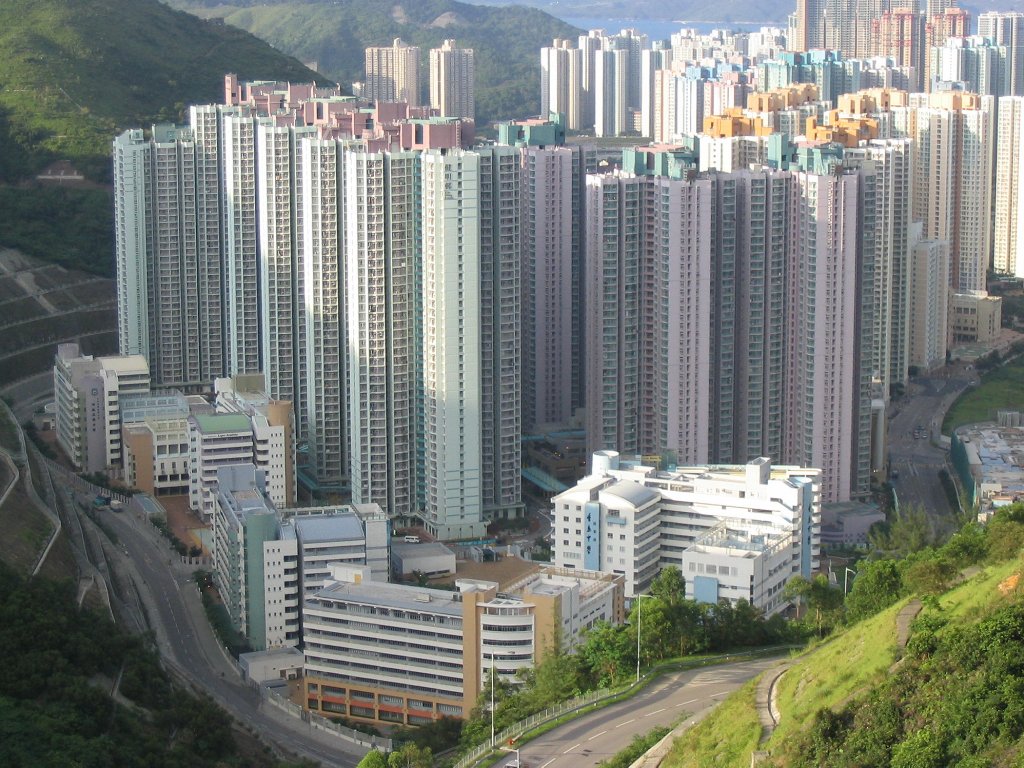 Public housing estates house roughly 30% of Hong Kong's population and are the government's main tool for keeping grassroots housing affordable. Source: Wikimedia Commons
1. Private Rents: Yes, Genuinely at "All-Time High"
According to on-the-ground tenant posts on Chinese social platform Xiaohongshu, by early 2026 people were already reporting "a 40 sqm (≈430 sq ft) flat renting for HK$14,000—rents have hit an all-time high." From May to June 2026, multiple Hong Kong property watchers noted "rents broke records five months in a row" and "May saw the biggest monthly jump in 21 months."
This isn't anecdotal. Hong Kong has long been the world's least affordable housing market: Demographia's International Housing Affordability Survey recorded a price-to-income multiple of 17.0 for Hong Kong, far above second-place Vancouver at 10.6, rated "severely unaffordable." 2021 data showed an average 500 sq ft flat on Hong Kong Island costing about HK$9.44 million—a typical household would need to save roughly 20.7 years to buy one. Housing eats about 36% of average monthly household spending.
If you can't buy, you rent. Everyone piles into the rental market, and rents get pushed up.
2. Public Housing Wait Times: Your Hunch About "More Supply" Is Right
Here's a counterintuitive fact often missed: public housing supply has genuinely increased, and wait times have genuinely fallen.
Hong Kong public-housing info accounts on Xiaohongshu noted at the end of 2025 that "composite waiting time dropped to a low of 5.1 years, a full year faster"—a recent low. This reflects the government's 2018 shift in its Long Term Housing Strategy to a "70% public / 30% private" target, which accelerated public estate construction.
But note: the wait fell from a peak of about 5.8 years to 5.1—still over five years for a family to get a flat. And the government itself admits it has missed its annual public-housing completion target every year since 2014, with actual output at only about 47% of target. Supply is rising, but the base was too low and the backlog too deep, so the queue only inched down—far from solved.
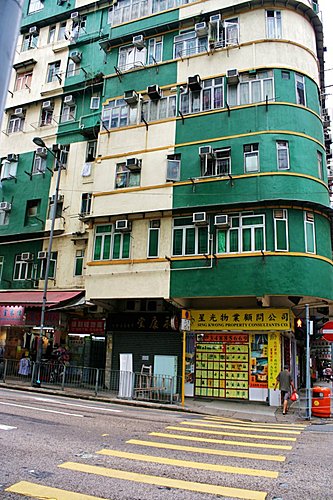 Subdivided flats ("partition units") in old buildings are the reluctant choice of the "sandwich class" stuck between private and public housing. Source: Wikimedia Commons
3. The Sandwich Class and Subdivided Flats: The Ignored Middle
The real pain sits with the "sandwich class"—those who earn slightly too much to qualify for public housing yet can't afford private flats. They can't get into public estates (just over the asset or income line) and are locked out of private housing by sky-high prices, so they flood into subdivided flats.
An estimated 280,000 people live in subdivided units. From January to March 2026, a subdivided unit in Sham Shui Po averaged about HK$4,800 a month for just 100–180 sq ft (≈9–17 sq m)—barely bigger than a parking space. Ironically, even public-housing tenants began struggling with rent: mid-2026 saw debate over "unemployed tenants who can't pay public rent," prompting the government to launch extra rental assistance.
In other words: private rents are rising, public waits are falling, but the sandwich class in between reaches neither—trapped in subdivided units that are both expensive and cramped.4. The Structural Bottleneck: Land Is the Real Constraint
Why does supply rise but rents don't fall? The answer is land.
Hong Kong's land is extremely scarce: a 2021 government estimate put the 30-year land shortfall at 3,000 hectares. The more distorted structure: village houses (small-house policy) occupy 44.3% of residential land but house only 7% of the population; the other 93% crowd into the remaining 55.7%. That means non-village residential areas are, on average, about 10.6 times as densely populated per unit of land.
Uneven land distribution, plus the hefty "land premium" charged to change land use and the difficulty of assembling New Territories plots, keeps developable residential land chronically bottlenecked. No matter how fast public estates are built, they can't outpace land release; and private developers sitting on scarce land have no incentive to cut prices.
 Hong Kong's top-tier private residences contrast sharply with grassroots subdivided flats, highlighting a two-tier housing market. Source: Wikimedia Commons
5. Latest Policy: Subdivided Flats Finally Regulated
In September 2025, Hong Kong passed the Basic Housing Units Ordinance (BHUO), effective 1 March 2026—the city's first comprehensive regime governing subdivided-flat lettings. Each "basic housing unit" must be at least 86 sq ft (≈8 sq m) with its own toilet. In July 2026, the first three compliant units were certified in Sham Shui Po.
This is progress, but a double-edged sword: upgrading a unit to standard costs an owner about HK$151,700 for three units, a cost that may be passed to tenants or push non-compliant units off the market—further shrinking affordable grassroots supply.
 Mei Ho House represents Hong Kong's early public estates, marking 70 years of public housing policy. Source: Wikimedia Commons
Conclusion: Record Rents and Shorter Queues Are Two Sides of One Problem
Hong Kong rents hitting "all-time high" is real, but public wait times hitting "recent low" is also real. Both happening together shows the problem isn't "whether there is supply" but "who the supply flows to":
- Private market: scarce land + developer holding → rents and prices stay high
- Public system: supply up but backlog huge → queue inched down, unsolved
- Sandwich class: reaches neither → trapped in subdivided flats
To truly ease rent pressure, building more public housing alone isn't enough—the fundamental land-distribution structure must move too. Otherwise private rents will just keep challenging the next "all-time high."
Frequently Asked Questions (FAQ)
Q1: Did Hong Kong rents really hit an all-time high in 2026?A1: Private rents did post repeated records. May 2026 saw the largest one-month jump in 21 months, and multiple Hong Kong property watchers reported "five straight months of new peaks" in the first half of the year. On-the-ground tenants reported cases like "HK$14,000 for a 40 sqm flat."
Q2: Why did public housing wait times actually get shorter?A2: After the government shifted its 2018 housing strategy to "70% public / 30% private," public estate construction accelerated, bringing the composite waiting time down from a peak of about 5.8 years to about 5.1 years by late 2025 (a recent low). But actual completions still hit only about 47% of target—the backlog isn't cleared.
Q3: What is the "sandwich class" and why are they worst off?A3: The sandwich class are families whose income or assets just exceed public-housing eligibility yet can't afford private flats. They can't get public housing and are priced out of private housing, so they rent subdivided flats—about HK$4,800 a month for just 100–180 sq ft.
Q4: Will the new subdivided-flats law (BHUO) make rents cheaper?A4: Not necessarily. The BHUO, effective March 2026, requires a minimum of 86 sq ft plus a private toilet; upgrading costs an owner about HK$151,700 for three units, which may be passed to tenants or pull non-compliant units off the market, shrinking affordable supply.
Q5: What is Hong Kong's most fundamental housing problem?A5: Land distribution. Village houses take 44.3% of residential land but house only 7% of people; the other 93% crowd into the rest. Changing land use requires a costly land premium and New Territories assembly is difficult, chronically bottlenecking residential land supply.
Tags
#HongKongRent #PublicHousing #HongKongProperty #SubdividedFlats #RentIndex #HousingCrisis #BHUO #SandwichClass
留言
張貼留言