One-line conclusion: A developer built a stock analysis tool "News Radar" with Vibe Coding in 4 months — 384 registered users, just ¥1,600 ($50) in membership revenue, while DeepSeek API costs alone ran ¥3,000/month. The painful lesson: code is the easy part. User acquisition and monetization are the real challenge in the AI era.
The Promise vs. Reality of Vibe Coding
If you've followed AI-assisted development over the past year, you've heard the seductive pitch:
"Build a product by yourself — just describe what you want and let AI write the code."This is Vibe Coding — using AI to generate most of your code while you focus on direction and iteration. It sounds like every indie developer's dream come true.
But a developer's brutally honest post on V2EX just poured cold water on that narrative.
He spent four months building "News Radar," an AI-powered tool that analyzes Chinese A-share stock market news. The results:
- Registered users: 384
- Membership revenue: Just ¥1,600 (~$50 USD)
- Monthly DeepSeek API cost: ¥3,000 (nearly double the revenue)
- User acquisition sources: Twitter/X and V2EX each contributed just 3%
After four months of work, losses far exceeded income.
"The Code Was the Easiest Part"
The most painful insight from this story is the developer's own reflection.
He initially thought the hardest challenge would be "getting AI to write working code." Instead, he discovered that code was the easiest part of the entire journey.
The real challenges were:
1. Where does traffic come from?The product was built, but nobody knew about it. Twitter/X and V2EX — his primary channels — combined for just 6% of user acquisition. Social media's organic reach has peaked, and acquiring users is brutally expensive.
2. Why would users pay?Conversion from registered user to paying member was abysmally low. AI tools have higher operating costs than traditional SaaS (API fees), but users' willingness to pay hasn't increased just because the underlying technology is more expensive.
3. Operations are 10x harder than developmentCode can be generated quickly by AI, but customer support, marketing, product iteration, and user research — none of these can be automated. Doing everything alone leads to burnout fast.
 The 2026 developer roadmap: winners won't be those who write the most code, but those who understand system design, evaluation, deployment, and improvement
Is the Vibe Coding Gold Rush Over?
Vibe Coding has experienced explosive growth in 2025-2026. GitHub Copilot, Claude Code, Codex, and similar tools have pushed individual developer productivity to unprecedented levels.
But this case study tells us: productivity does not equal business success.
In fact, Vibe Coding is transitioning from "hobbyist toy" to "mature tool." The era where generating code with AI was enough to succeed may be ending faster than we think.
Three reasons:
1. AI Tools Are Becoming Infrastructure
A year ago, being able to code with AI was a competitive advantage. By mid-2026, virtually every developer uses AI tools — Copilot, Claude Code, and Codex are table stakes. When everyone can generate code with AI, code itself ceases to be a differentiator.
 The 2026 developer roadmap (satirical): Subscribe to Claude → Write a prompt → Ship something barely functional → Post on X "Built this in 48 hours"
2. Operating Costs Are Underestimated
Vibe Coding reduces development costs, but operating costs — API fees, server costs, customer acquisition costs — haven't decreased at all. In fact, they've increased because AI features require expensive model calls.
In the News Radar case, DeepSeek API costs alone hit ¥3,000/month — far exceeding membership revenue. This is the brutal math of AI SaaS: your development costs went down, but your operating costs went up.
3. Quality Bar Is Rising
As the market becomes flooded with AI-generated half-products, user expectations are getting stricter. Buggy, rough, unstable products get eliminated quickly. AI can help you build an MVP fast, but the gap between MVP and a real product is still enormous.
What Does Successful Vibe Coding Look Like?
This story doesn't mean Vibe Coding is useless — it means treating Vibe Coding as a shortcut to success is a mistake.
Developers who actually succeed with Vibe Coding typically have these traits:
Existing Audience
If you already have Twitter/X followers, a blog readership, or an existing community, the cold-start problem for Vibe Coding products is much easier. For indie developers starting from zero, the scarcest resource isn't coding ability — it's an audience.
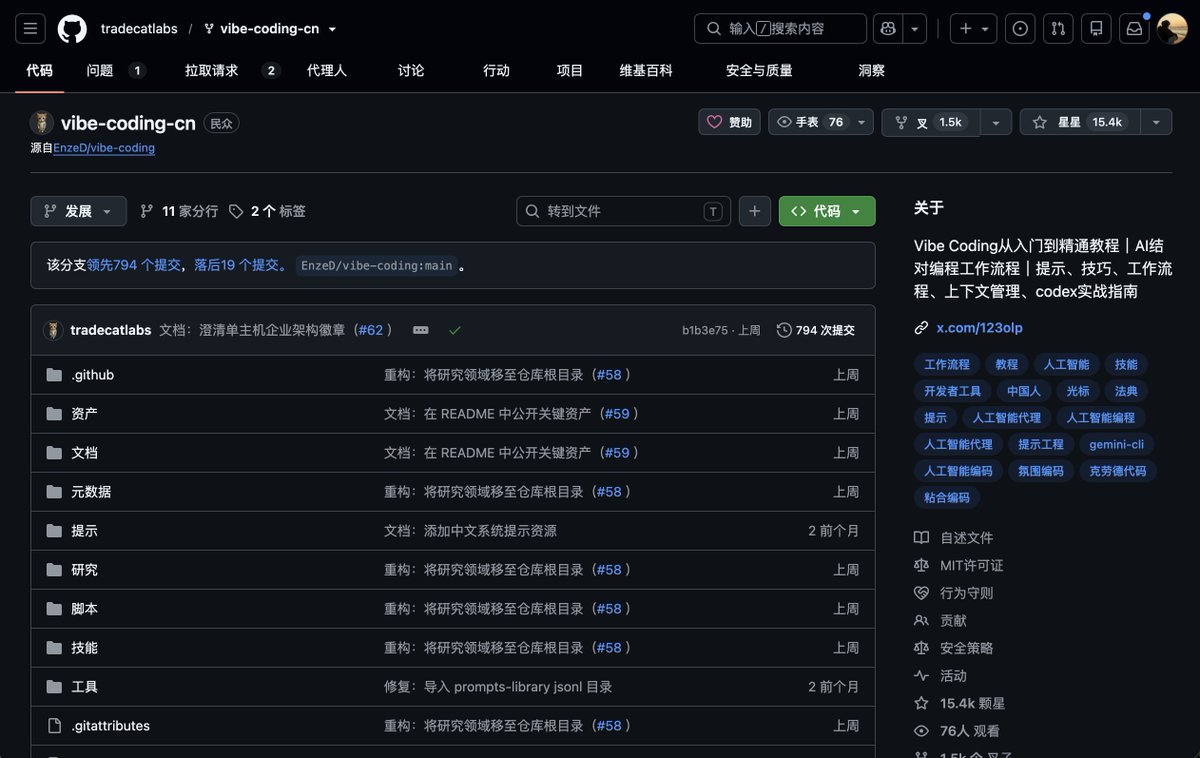 The systematic Vibe Coding framework: from prompts to quality gates — a 5-layer methodology for reliable AI-assisted development
Honest Self-Assessment
Vibe Coding is best suited for "product-minded non-programmers" — people who can use AI to quickly validate ideas, build prototypes, and launch MVPs. But they still need a technical co-founder for infrastructure, security, and performance.
AI as Accelerator, Not Replacement
The most effective Vibe Coding workflow: let AI handle repetitive, time-consuming tasks (boilerplate, CRUD, tests) while you own system design, product direction, user needs, and business model. If you let AI decide your product positioning and business model, failure becomes highly likely.
What Linus Torvalds Thinks
Coincidentally, around the same time this case went viral, Linus Torvalds weighed in on AI coding in the Linux kernel mailing list.
His position is clear: Linux is not an anti-AI project. Nobody has to use LLM tools, but he will "very loudly ignore" anyone trying to ban others from using them. If you don't like it, fork the project or leave.
Torvalds even admitted to "hobby vibe coding" with Google Antigravity.
But he also highlighted a core problem: METR's 2025 study found AI tools made open-source developers ~19% slower, even as they felt faster. The issue isn't efficiency — it's noise management. AI-generated code requires more review time.
In other words: even Torvalds agrees AI coding is inevitable, but he reminds us AI is no silver bullet.
Practical Advice for Indie Developers
If the News Radar developer could start over, what would he do differently?
1. Validate demand before writing codeBefore spending four months building a product, manually validate whether anyone would pay. Create a simple landing page with a subscribe button and see how many people click. If nobody registers for a free landing page, writing code won't fix that.
2. MVP of the MVPDon't build a full analysis tool from day one. Start with the simplest version: send a daily email with news summaries. If email open rates are below 10%, the need doesn't exist.
3. Revenue first, features secondThe first version of your product should have exactly one goal: someone pays for it. Everything that doesn't serve this goal is waste. API costs too high? Limit free usage or use caching.
4. Build a distribution channelCode is the easiest part; distribution is the hardest. Before writing a single line of code, figure out where your users come from. If the answer is just "Twitter/X and V2EX," you may need to rethink.
FAQ
Q1: Can Vibe Coding actually make money?A1: Yes, but not by just "writing code and money follows." Successful Vibe Coding entrepreneurs typically have an existing audience or product mindset. AI is an accelerator, not a shortcut.
Q2: What's the biggest lesson from the News Radar case?A2: User acquisition and monetization are far harder than writing code. 384 registered users with minimal conversion and API costs exceeding revenue — a cautionary tale for AI SaaS.
Q3: Is the Vibe Coding gold rush over?A3: Not over, but maturing. AI-assisted coding has gone from competitive advantage to table stakes. Code generation alone no longer creates a moat.
Q4: What's Linus Torvalds' stance on AI coding?A4: He supports AI as a tool but rejects both outright bans and blind worship. He notes AI code needs more review time but considers the trend unstoppable.
Q5: How can indie developers avoid the same failure?A5: Validate demand first, keep MVP minimal, prioritize revenue over features, and build distribution channels before writing code.
Q6: What's the hidden cost of AI-powered products?A6: API fees. AI SaaS operating costs are much higher than traditional SaaS because every user request triggers expensive model inference, not just fixed server costs.
Q7: How do you evaluate if an AI product idea is worth pursuing?A7: Remove "technical feasibility" from your evaluation criteria — assume AI can build anything. The only remaining question: "Will someone pay for this solution?"
Tags: #VibeCoding #IndieDev #AISaaS #Developer #Startup #Monetization #IndependentDeveloper
留言
張貼留言