One-line conclusion: GM is partnering with Peak Energy to pour $900 million into sodium-ion battery development, targeting 2028 commercialization — 20% cheaper than lithium, and free from lithium supply chain constraints.

The Energy Revolution You Didn't Notice
While the world is focused on the AI model arms race, another revolution is quietly unfolding — one that could fundamentally change the price of electric vehicles.
General Motors just announced a $900 million investment in advanced battery technology, partnering with sodium-ion startup Peak Energy. The goal: commercialize sodium-ion batteries by 2028.
This isn't a small R&D project. GM is positioning sodium-ion batteries as a critical technology for AI data centers, power grids, and large-scale energy storage — not just EVs.
Sodium-Ion vs. Lithium: Why This Matters
Traditional lithium batteries rely on lithium as a key raw material. The problems:
- Uneven distribution: Australia, Chile, and China control most production
- Price volatility: Lithium prices swung wildly between 2022-2024
- Environmental concerns: Mining consumes massive amounts of water
- Geopolitical risk: China controls ~60% of global lithium refining capacity
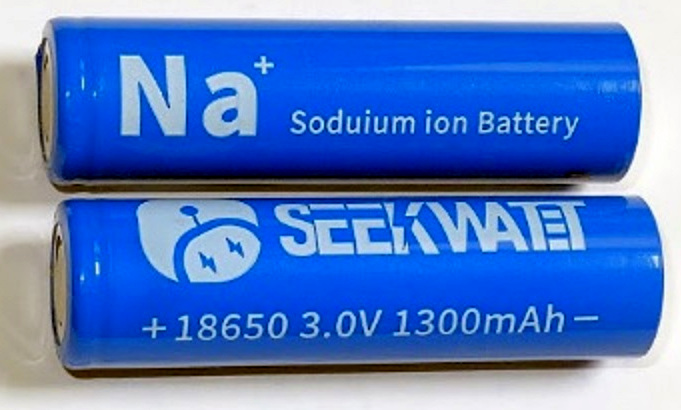
Sodium-ion batteries are fundamentally different:
| Feature | Lithium | Sodium-Ion |
|---------|---------|------------|
| Raw material cost | High (~$15,000/ton) | Low (sodium from seawater, nearly free) |
| Material distribution | Concentrated (Chile, Australia, China) | Global (salt/seawater everywhere) |
| Energy density | High (~250 Wh/kg) | Medium (~150 Wh/kg) |
| Safety | Thermal runaway risk | Safer, less fire risk |
| Environmental | Mining pollution | More eco-friendly |
| Cost target | $100-130/kWh | $70-90/kWh |
The key takeaway: sodium-ion has lower energy density, so it won't power your smartphone. But for EVs and grid storage, it's more than adequate.
GM's Plan: From AI Data Centers to EVs
Peak Energy claims its platform delivers:
- 20% cost reduction
- 99%+ uptime reliability
- 2028 commercial production
Notably, GM's first application target is AI data center backup power — not EVs. This is a smart entry point: data centers need massive, stable power where density isn't critical but cost and safety are paramount.
Meanwhile, ESS and Juniper Energy are planning 500+ MWh of sodium-ion storage in California, with the first 80 MWh project expected to begin operations in 2027.
Why Now?
Sodium-ion battery technology isn't new — researchers have studied it for over a decade. What changed?
Three catalysts:1. AI's power hunger — Goldman Sachs predicts $358 billion in electricity infrastructure investment for AI over the next five years. Every new data center needs massive storage.
2. Lithium supply chain anxiety — China controls lithium refining. Geopolitical tensions have made automakers realize they can't hand EV supply chains to a strategic rival.
3. Technology maturity — Sodium-ion energy density has improved ~50% in five years, now approaching practical thresholds.
The Impact
On EV Prices
If sodium-ion cuts battery pack costs from $100/kWh to $70/kWh, a 60 kWh EV saves $1,800. At a time when the EV-gas car price gap is only a few thousand dollars, this could make EVs cheaper than comparable gas vehicles for the first time.
On the Lithium Industry
Sodium-ion doesn't need lithium. This is a long-term existential risk for lithium miners' valuations.
On Taiwan's Supply Chain
Taiwan plays a key role in the battery supply chain — from cathode materials (FPC, China Steel Chemical) to battery management ICs (Silergy, uPI) to EV supply chain (Hon Hai, Delta). Mature sodium-ion technology means Taiwan's supply chain needs to adjust its technology roadmap.
Conclusion
GM's $900 million bet isn't just one automaker's technology choice — it's a signal that the energy industry is undergoing a structural transformation.
When the sodium from your table salt becomes the core material powering AI data centers and electric vehicles, we're witnessing the beginning of a new era.
FAQ
Q1: What's the difference between sodium-ion and lithium batteries?A: The core difference is raw materials. Sodium-ion uses sodium (from seawater or salt) instead of lithium. Sodium is cheaper and abundant, but has lower energy density (~150 vs ~250 Wh/kg). Best for stationary storage and EVs, not slim consumer electronics.
Q2: Is $900 million a lot for GM?A: For a company with ~$180 billion annual revenue, $900M isn't enormous, but it's significant for "advanced battery development." For context, Tesla's 4680 battery R&D is estimated at $1.5-2 billion.
Q3: When can I buy a sodium-ion product?A: Peak Energy targets 2028 commercialization. ESS and Juniper's first 80 MWh project is expected in 2027. Early products will be data center backup and grid storage; EV versions likely 2028-2030.
Q4: Are sodium-ion batteries safer?A: Yes. Sodium-ion has better thermal stability and is less prone to catching fire even under overcharge or short circuit conditions — a key reason data centers are interested.
Q5: Will this crash lithium stocks?A: Not in the short term — sodium-ion's market share is likely only 10-15% by 2030. But if the technology matures as projected, lithium demand growth could flatten significantly.
Q6: How far can a sodium-ion EV go?A: At current energy density (~150 Wh/kg), a 60 kWh EV would have a ~350-400 km range. Less than lithium's 500-600 km, but sufficient for daily commuting.
Q7: Which Taiwanese companies are working on sodium-ion?A: Taiwan Cement's E-One Energy is researching sodium-ion. Hon Hai is evaluating it for electric buses. Taiwan's battery material suppliers need to watch this technology closely.
Tags: #GM #SodiumIon #EV #BatteryTech #PeakEnergy #Lithium #EnergyStorage #CleanEnergy
留言
張貼留言