One-line conclusion: Five years ago, cancer patients had only three options—chemotherapy, radiation, or antibodies. Since 2022, the FDA has approved four entirely new classes of cancer drugs that didn't exist before, with two more in Phase 3 trials. The list of "undruggable" cancers keeps getting shorter—and faster.
Imagine this: five years ago, if your loved one was diagnosed with advanced cancer, the doctor's menu had three items—chemotherapy, radiation therapy, or an antibody drug.
Today, that menu has expanded to six entirely new categories. And four of them went from laboratory bench to FDA approval in under four years.
Let's look at these game-changing breakthroughs.
Breakthrough 1: Radioligand Therapy — "Missile-Grade" Precision Strikes
In March 2022, the FDA approved Novartis's Pluvicto (lutetium-177 vipivotide), the world's first radioligand therapy, specifically for prostate cancer.
The mechanism is ingeniously simple: design a "microscopic missile" with a navigation system (recognizes specific proteins on cancer cell surfaces) carrying a radioactive payload. Once injected, the missile homes in on cancer cells and fires radiation from inside the tumor.
Key data: In the VISION trial of 831 patients, median survival reached 15.3 months versus 11.3 months with conventional therapy.
 Radioligand therapy principle: guided molecule delivers radioactive payload directly to cancer cells
Breakthrough 2: T-Cell Engaging Antibodies — Letting Your Immune System "Catch Its Own Enemies"
In May 2024, Amgen's Imdelltra was approved for small cell lung cancer. This drug works like a bridge—one end grabs the cancer cell, the other grabs the patient's own T cells (the immune system's killers), forcing them together.
Result? Phase 3 trials showed survival doubling from 8.3 months with chemotherapy to 13.6 months.
The main risk is cytokine release syndrome (immune overreaction), but most cases are mild and manageable.
Breakthrough 3: Engineered TCR-T Cell Therapy — Conquering Solid Tumors for the First Time
In August 2024, Adaptimmune's Tecelra received approval—a historic moment. This was the FDA's first engineered T-cell therapy approved for a solid tumor (synovial sarcoma), not just blood cancer.
How it works: the patient's T cells are extracted, reprogrammed in a lab to recognize specific proteins hidden inside tumor cells, then infused back. About 39% of patients showed tumor shrinkage after a single dose.
This is significant because while T-cell therapies worked well for leukemias and lymphomas, they struggled against solid tumors—which account for over 90% of all cancers.
Breakthrough 4: Antibody-Drug Conjugates (ADC) — The "Trojan Horse" Approach to Chemotherapy
In January 2025, Daiichi Sankyo and AstraZeneca's Datroway was approved for breast cancer.
ADC drugs work like Trojan horses: an antibody外观 that precisely recognizes cancer cells, but internally carries a chemotherapy warhead. When the antibody attaches to the cancer cell and is swallowed, the warhead detonates inside.
The benefit: chemotherapy drugs are released only inside cancer cells, drastically reducing damage to healthy tissue.
 Novel vibrating molecule technology destroyed 99% of cancer cells in lab tests
Breakthrough 5: Personalized mRNA Cancer Vaccines — A Vaccine Made Specifically for Your Cancer
Moderna and Merck's mRNA-4157 is arguably the most exciting cancer vaccine in development. The concept: analyze your tumor's unique genetic mutations, then "print" a vaccine targeting those exact mutations, training your immune system to recognize and destroy those specific cancer cells.
Key data: In the KEYNOTE-942 trial, adding the mRNA vaccine to Keytruda reduced the risk of melanoma recurrence or death by 44%—79% of patients remained cancer-free at 18 months versus 62% with Keytruda alone.
Over five years, nearly 69% of patients maintained cancer-free status.
Breakthrough 6: KRAS Degraders — Attacking the "Undruggable" Target
The KRAS protein has been called the holy grail—and the bane—of cancer research. It drives about 40% of pancreatic cancers and has been labeled "undruggable" for decades, meaning scientists couldn't find a way to block its function.
Astellas's ASP3082 takes a completely new approach: instead of trying to block KRAS directly, it tags the protein for destruction by the cell's own recycling system.
This therapy is now in Phase 3 trials.
From Bench to Bedside: Unprecedented Speed
What's most astonishing isn't just what these therapies do—it's how fast they got here.
Five years ago, these drug classes simply didn't exist. Since 2022, the FDA has cleared four brand-new ways to kill tumors. Two more are in Phase 3 right now.
Biomedical scientist @agingroy summarized it perfectly: "A patient with no options today has four kinds of drug that weren't on any shelf five years ago, and two more coming. The list of 'undruggable' keeps getting shorter—and it's getting shorter faster."
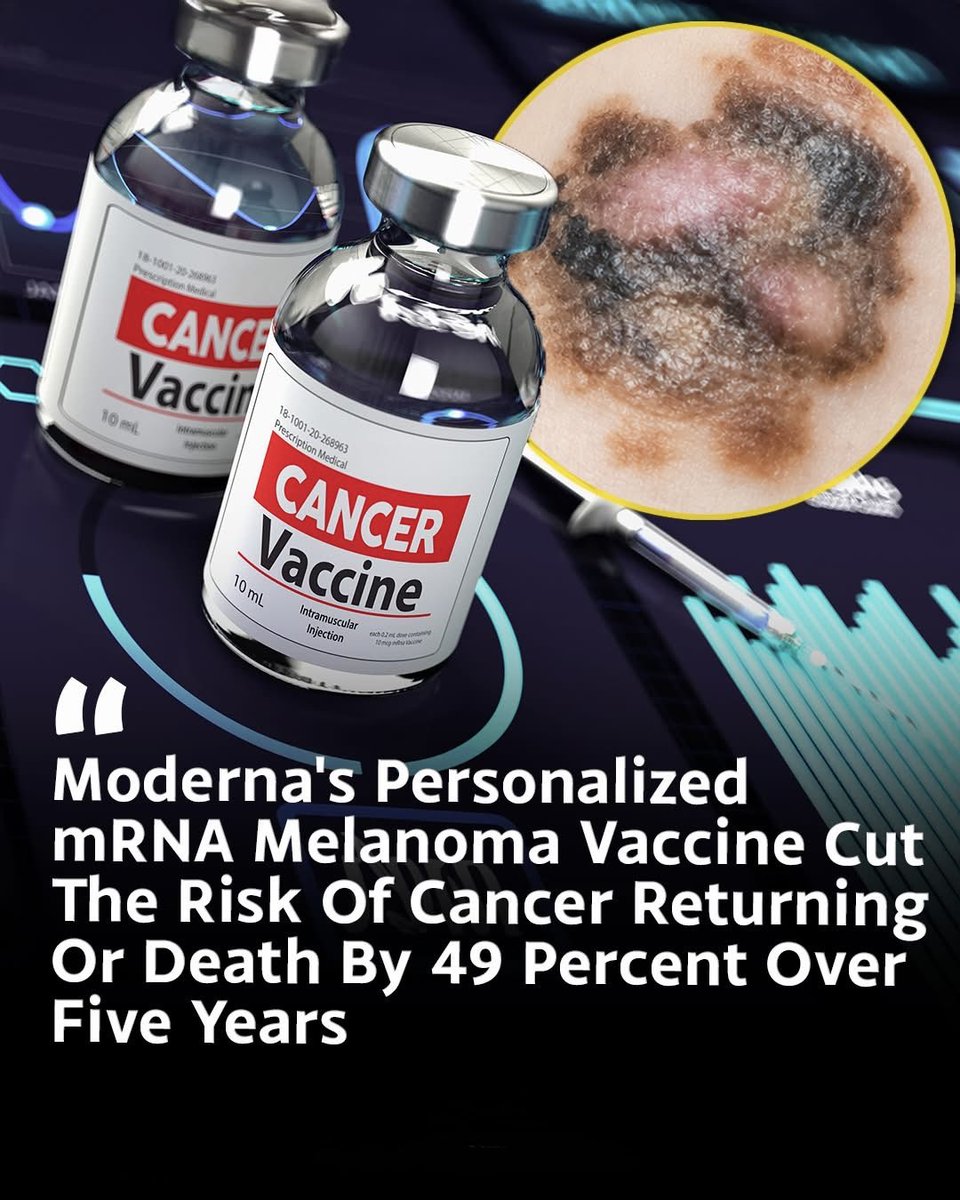 Moderna mRNA cancer vaccine five-year data: 69% of patients remained cancer-free
What This Means for Everyday People
You might think these technologies are far removed from daily life. But consider:
- Early detection is becoming vastly more precise (spatial omics and other technologies let doctors understand tumors at the cellular level)
- Personalized treatment is no longer science fiction—your tumor's genetic sequence will directly determine your therapy
- Survival times keep climbing: from an average of 18 months five years ago to over 15 months in some cancer types today
- Side effects are decreasing: precision targeting means healthier cells suffer less damage
Cancer, once viewed as a single disease, is now understood as hundreds of different diseases. And each breakthrough brings us closer to making more of them curable.
Frequently Asked Questions (FAQ)
Q1: Does radioligand therapy work for all cancers?A1: Currently it's mainly effective for cancers expressing specific surface proteins (like PSMA), most maturely for prostate cancer. Different cancer types have different marker proteins, requiring new navigation molecules to be developed for each.
Q2: Are the side effects of T-cell engaging antibodies serious?A2: The main risk is cytokine release syndrome (CRS)—an immune system overreaction. Most cases are mild (fever, fatigue), and severe cases are rare and controllable with drugs like tocilizumab.
Q3: When will mRNA cancer vaccines be widely available?A3: Moderna's mRNA-4157 is still in Phase 3 trials and has not yet received FDA approval. Earliest expected availability is 2027-2028. But the technology pathway has been validated and may expand to other cancer types.
Q4: Why was KRAS called "undruggable"?A4: KRAS is an intracellular signaling protein controlling cell growth and division. Its surface is remarkably smooth, making it extremely difficult for traditional drugs to find a "grip" to block its function. For three decades, countless attempts failed. Only recently have degrader approaches shown promise.
Q5: How expensive are these new therapies?A5: Very. A single course of Pluvicto exceeds $300,000. T-cell therapies like Tecelra are priced around $1.7 million. This reflects not just the drug cost but the complex manufacturing process (extracting T cells, reprogramming them in a lab, infusing them back).
Q6: Are these therapies available in Hong Kong and Taiwan?A6: Some FDA-approved drugs are available or in application in Taiwan and Hong Kong. But highly personalized therapies like mRNA vaccines require sophisticated tumor genomic profiling and manufacturing facilities, currently concentrated in major medical centers in the US and Europe.
Q7: What's the biggest cancer breakthrough expected in the next five years?A7: Experts broadly agree on three directions: (1) CAR-T therapy expanding from blood cancers to more solid tumors; (2) AI-accelerated drug design speeding up new drug development; (3) multi-target combination therapies (using two or more new-mechanism drugs simultaneously) potentially delivering greater survival benefits.
Tags: #cancer #oncology #immunotherapy #radioligand #MRNavaccine #FDA #precisionmedicine
留言
張貼留言